
How I went from Czechia to Spain: Itineraries tend to be a bit fluid when on the road long term. The plan for this sabbatical was to follow the cooler climate (see quirk #3) and visit countries I’ve not yet seen on previous excursions. Since I’d never been to Spain and have a strong desire to improve my high school Spanish, it was always on the list of potential locations, though only once summer was completely over in the large, sun drenched country. The dream was to spend a glorious 90 days between various Spanish cities, immersing myself in the language, culture, and food while the heat wasn’t such a lethal companion.
Wellllll that was when I thought I could spend 90 visa free days in EACH country. Nope. Upon arrival in Sweden, I was informed the 90 visa free days are for the entire Schengen zone. Schengen what?!?! There’s a European country, then there’s the European Union, then there’s the Schengen zone. Of course I hadn’t known about this, so my itinerary was changed on the fly and limited me to much shorter visits in each place meaning I wouldn’t be in Europe long enough for the heat of Spain to lessen. Wahhhhh!
After several weeks touring Central Europe, I was starting to itch for food without potatoes and a bit of seaside. Hmmm, I thought, Northern Spain in Basque country isn’t that hot in September and lookie there, a cheap flight from Prague! Boom, Bilbao called and I answered. Aside from the atrocity that is private rooms through AirBnB (just don’t. ever. get a hostel.), I absolutely adored this part of the trip! The metropolis of Bilbao is a perfect size. Coming in at less than 500k population for the city and surrounding area means there’s plenty to do without all the big city crazy.
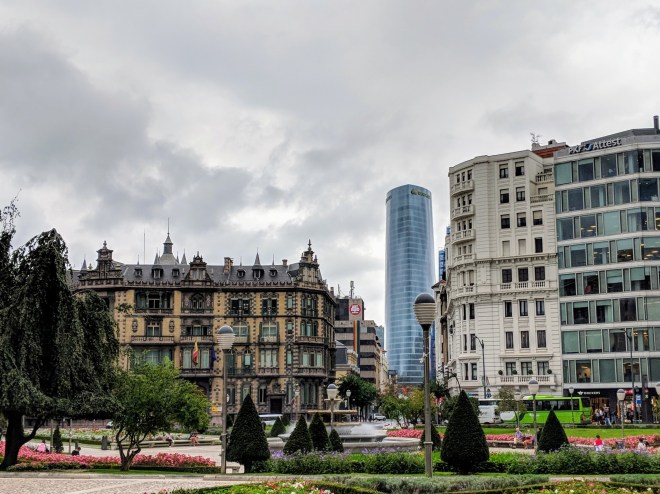
Walking and Gawking: Bilbao was chartered as a city in 1300 but by then, of course, it was already built up and consisted of 7 streets, a church, and a town hall. These 7 streets are still fascinating to meander through; delights to be found everywhere. Across the river from Old Town is where the hipsters live. What used to be run down, neglected neighborhoods now house some of the more eclectic yet upscale homes and boutiques. The buildings’ facade from Old Town only hints at the treasures to be found across the river.


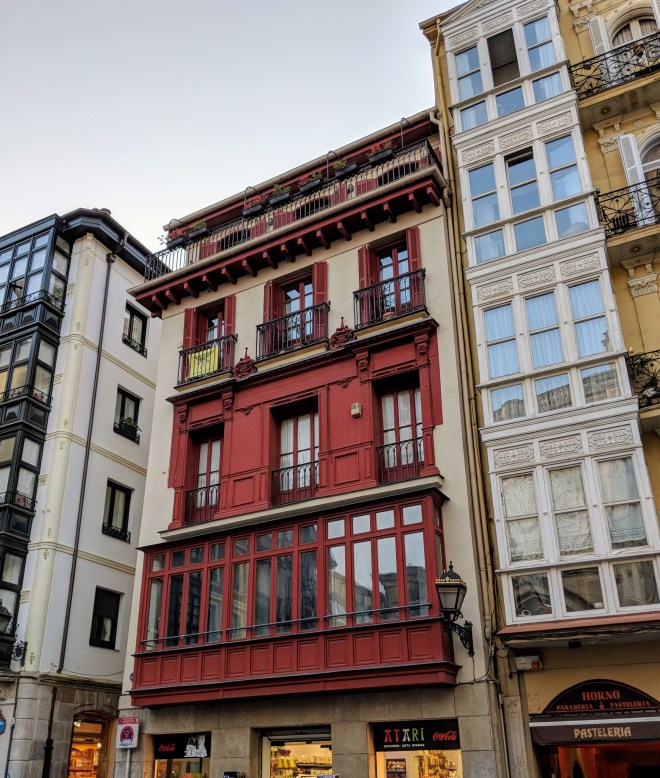
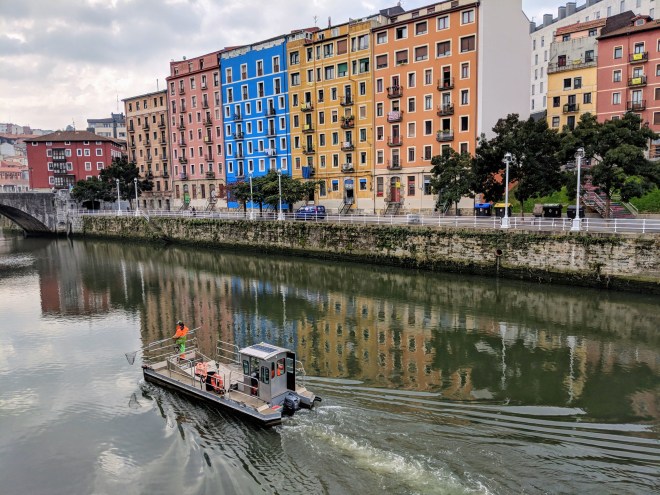
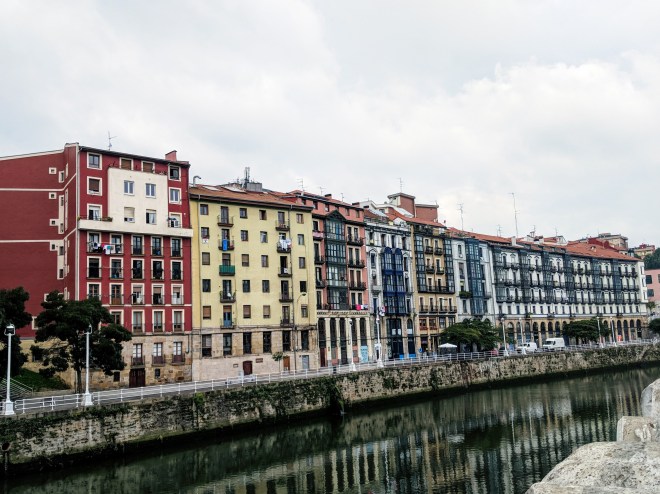

After the more reserved cultures in Central Europe, it was a pleasure to be among my people; Smiling ones. It’s a widespread myth among travelers that the more sun a region has, the more likely a local will whip out a smile. Although that isn’t quite true, it sure was a joy to walk through the city and have a smile returned when given – and if you know me, is always.
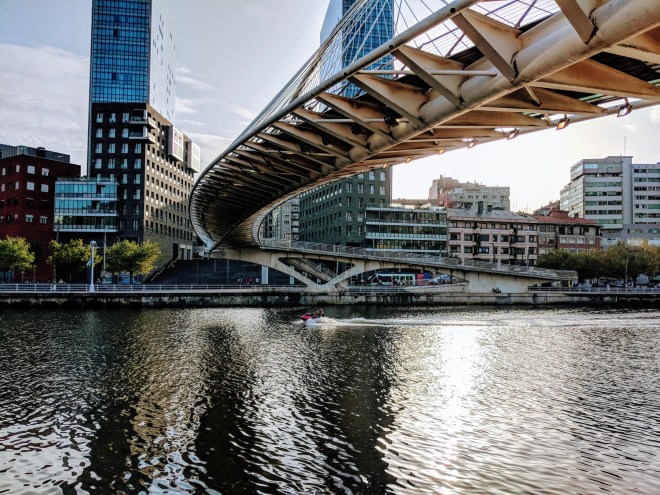
Bilbao was historically highly industrial until the mid 90s. The Mayor at that time made the dramatic decision to move all industry toward the sea and to reinvent Bilbao as a destination city. To that end, he commissioned beautiful bridges and building of the Guggenheim museum. Although the cost of revival was high and extremely controversial, the city’s economy not only absorbed the cost within a few years, but became quite prosperous, giving business opportunities to so many who previously had none. You can see this initiative throughout the city, including in the giant puppy who sits in front of the titanium Guggenheim. He requires the replanting of more than 1000 flowers each month and has become the mascot of the city for all.


Christmastime is special in Bilbao; it’s when the brutes come out to play. The entire main square on the riverfront is turned into a rural sports stadium with competitions for wood chopping, stone lifting, cob gathering, sheep shearing, rock hole drilling, donkey racing, etc… I am so enamored with this idea, there may be another trip in my future just to see the action in Bilbao and maybe throw in the Scottish Highlands to double down.
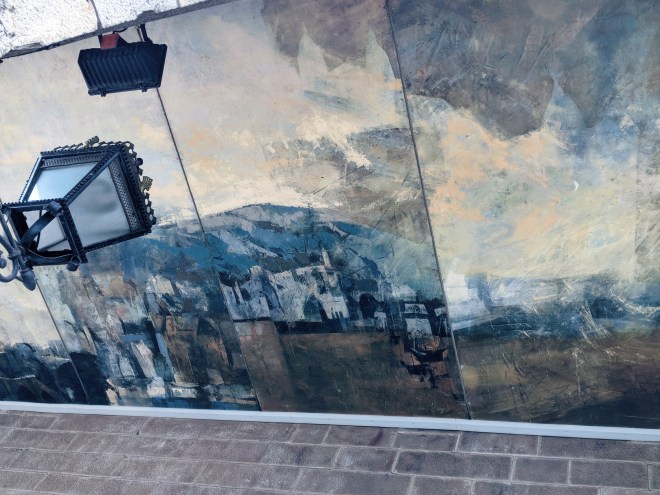
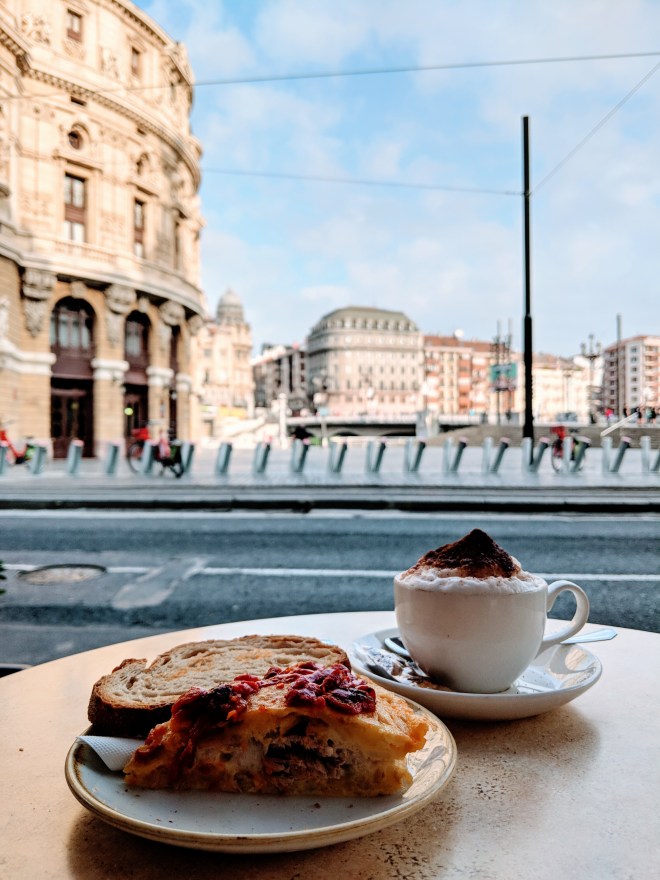
Once, I was desperately trying to find a bathroom which had a sink AND soap AND something to dry my hands with; Seriously, this can become a full time hunt in Northern Spain. Finally, I came upon a sweet little cafe on the river where I just soaked it all in. The first indication that I was right where I should be was the notebook I noticed on the bartop covered in a hand written alphabet with scribbles all over. When I took in the whole scene, I found the bartender and waiter patiently explaining some nuance of the Basque language to a customer whom I later learned was a refugee from Senegal. He couldn’t speak English, I can’t speak French, and neither of us had Basque or Spanish down, but even with the language barrier, the four of us had a great time laughing about languages and hand gestures. They served wonderful coffee and while sitting on their cafe sidewalk, I interacted with so many lovely people, some of whom addressed me only because they heard me laughing softly to myself and wanted to join in on the joke; Didn’t matter a lick that we weren’t speaking the same language. The sidewalk ceilings were painted with impressionist versions of the city and under them strolled a countless number of dogs and their owners, likely to hit up the dog fountain a few blocks away.
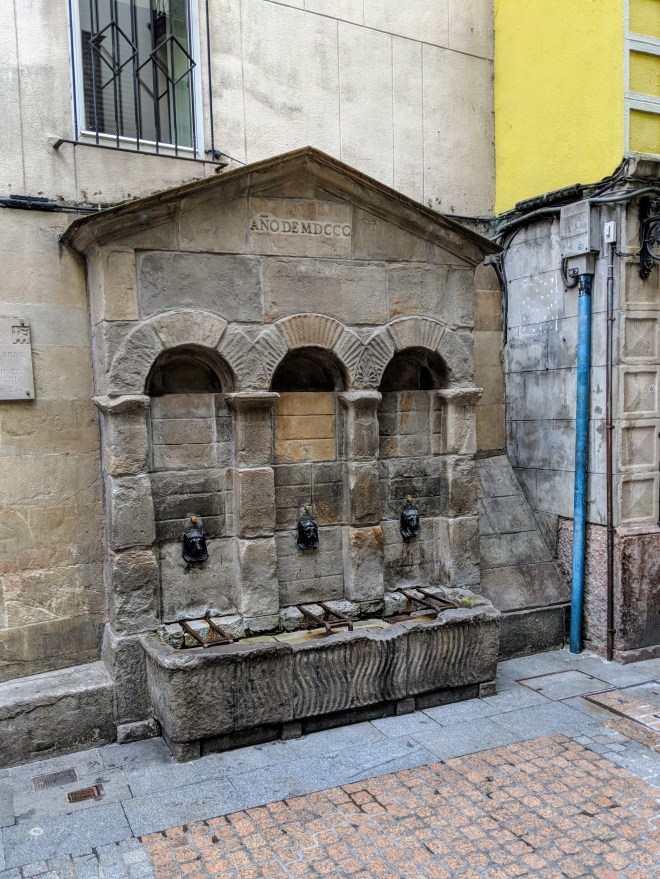
Dog fountain 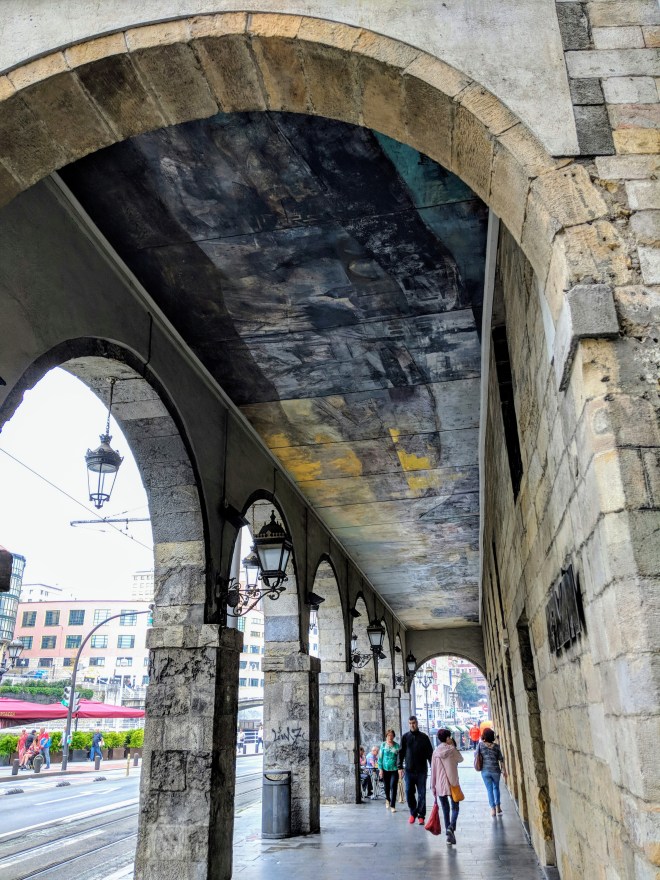
Although the Basque region is technically part of Spain (there used to be some Basque in France, but no more), it is highly autonomous. The language and culture died for several decades while Franco was in power and has resurged with a vengeance since his death. Their children go to school learning the Basque language, not Spanish. It’s common to find instructions and signs written only in Basque, which is vastly different from the high school Spanish on the tip of my tongue. Their Euskaltzaindia, located in a gorgeous square, is where a group of folks watch over the language itself, keeping it alive by discovering or developing new words and phrases. For English, these would be the people who put the word “ginormous” in the Basque dictionary.
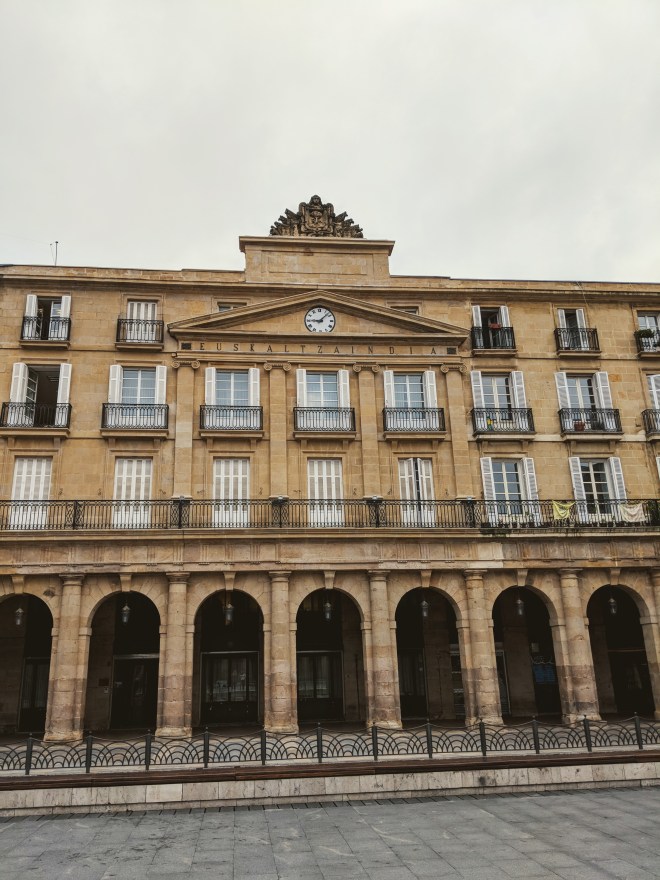
Euskaltzaindia 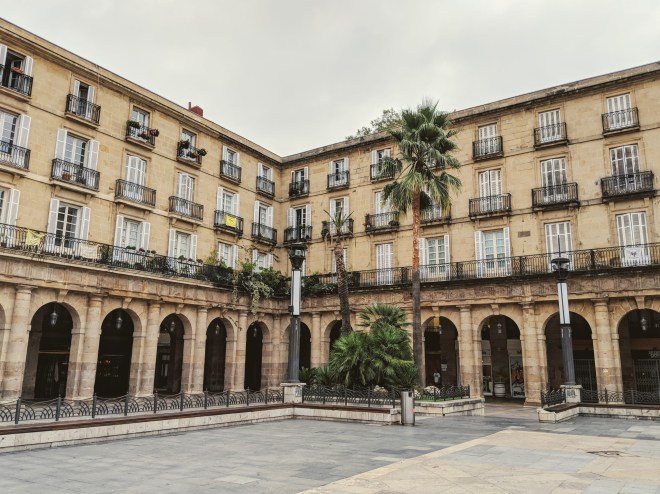
Euskaltzaindia’s square
The taxes they pay are also distributed differently from those in other regions of Spain, giving them more ability to fund infrastructure and take care of their people in the way they see fit. All of this gives the Basque people a sense of pride and it is one of the more affluent regions of the country. On top of being located in a stunning natural area, why wouldn’t they smile!?!



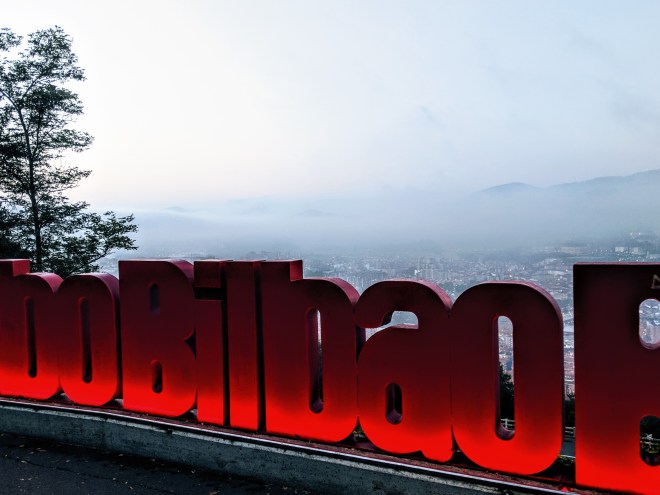
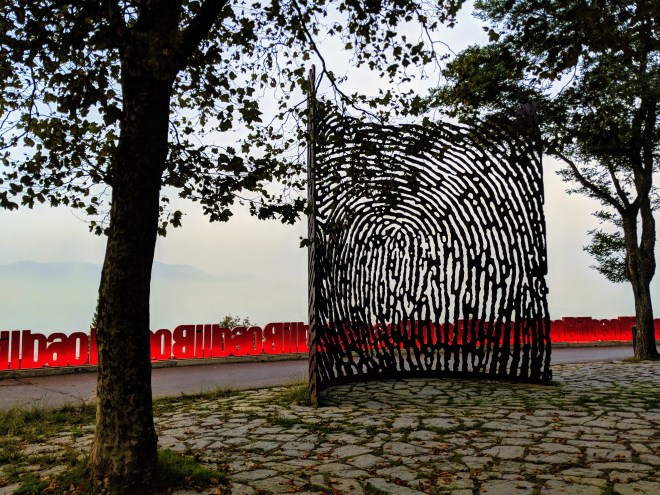
There’s a clean and fast funicular in town which relieves a super windy road or serious hike up to some beautiful views of the city below. I’m a sucker for a good funicular and this one was actually built to take residents up to another of my favorite things; a casino. Back when gambling was a deplorable sin, but still accommodated, they placed a casino outside of the city, high on a hill and built a funicular to carry the sinners back and forth. To my chagrin, there is no longer a casino at the top of the hill, but there are stunning views (on a clear day) and the fingerprint of the city.

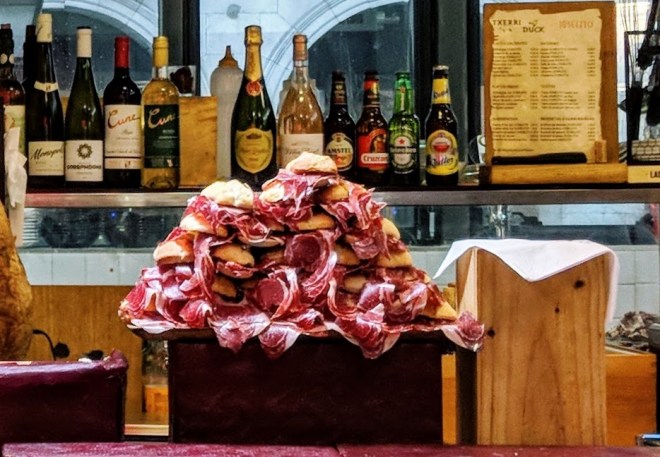
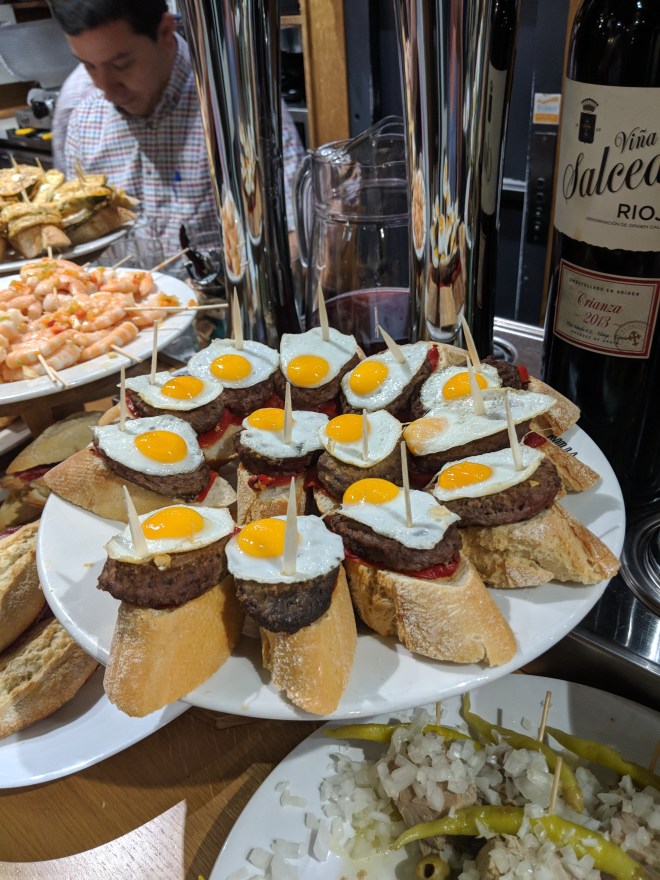
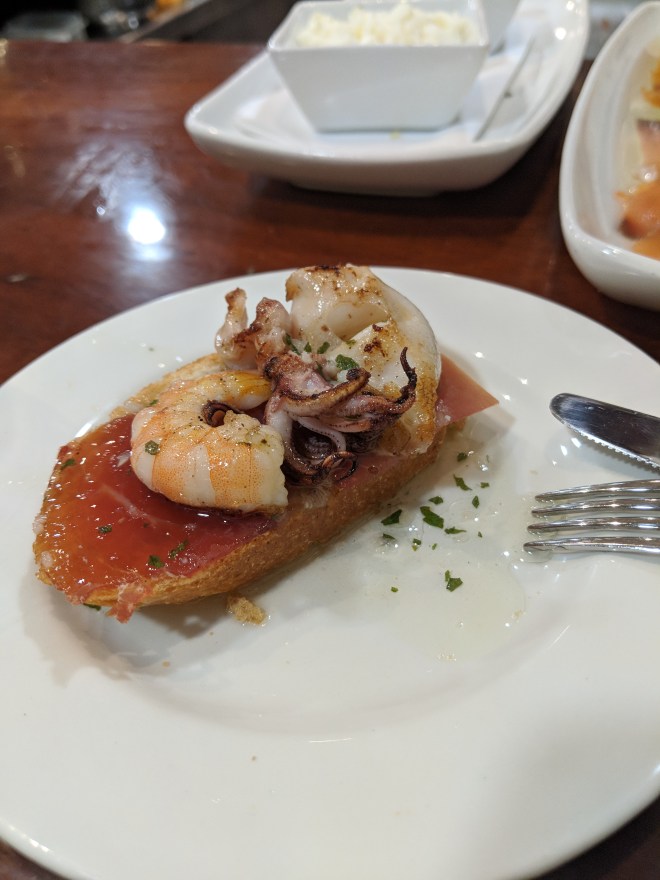
Food: Basque food is world renowned – per capita, they have more Michelin stars than any other region in the world! I booked a tour through AirBnB Experiences (do it!) and my guide showed me how to see the city and where to find the best pintxos. Pintxos are what Basques eat… always. If you know that tapas are small plates of which you order several and share, you’re halfway to understanding pintxos (peen•chohs). This remarkable little food was originally served as a piece of bread, topped with various foods – often seafood, then speared with a toothpick. Today’s pintxos are decidedly similar in that they are still quite small, intended to be one or two bites, and served on (or often just with) bread. The way to eat them is by bar crawling. Yup, you order one pintxo and one very small beer (called a zurito) or wine in an establishment, then move to another and repeat until you’re sated. The key here is one at a time, any more and you’re pegged as a tourist. I am a tourist so sometimes I threw caution to the wind!
Because of this tradition, there aren’t sit down tables, you just stand at a small counter to chat a bit and enjoy. Many pintxo restaurants consist only of a bar to order where their specialties are displayed at eye level and/or written on a board with a few ledges inside and outside. Of course the turnover of customers is pretty quick, so there are also typically several employees about, grabbing refuse and glasses from the counters at breakneck speed. This creates an adventure just in the logistics of ordering and consuming your meals which, for a traveler, is part of the fun!





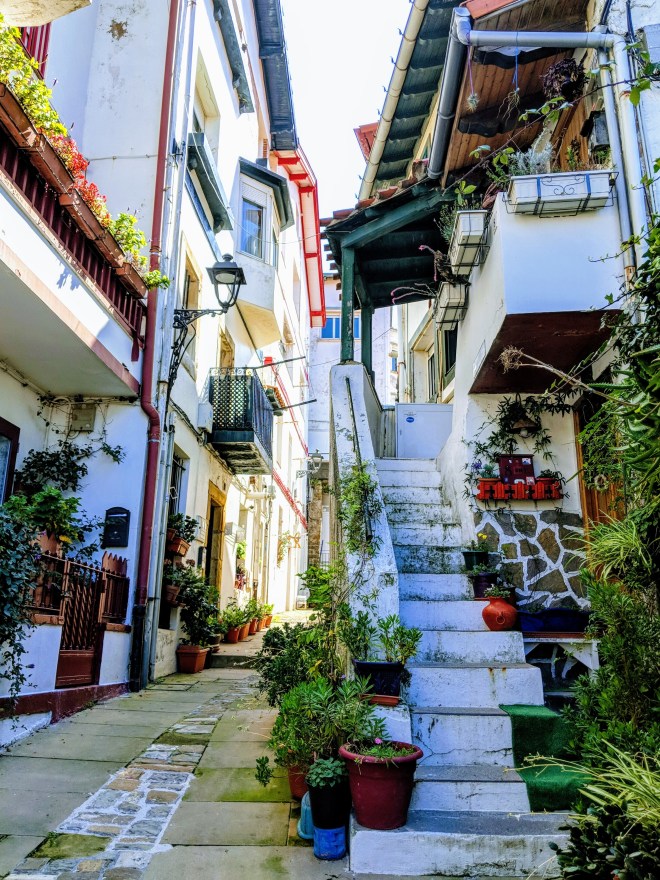
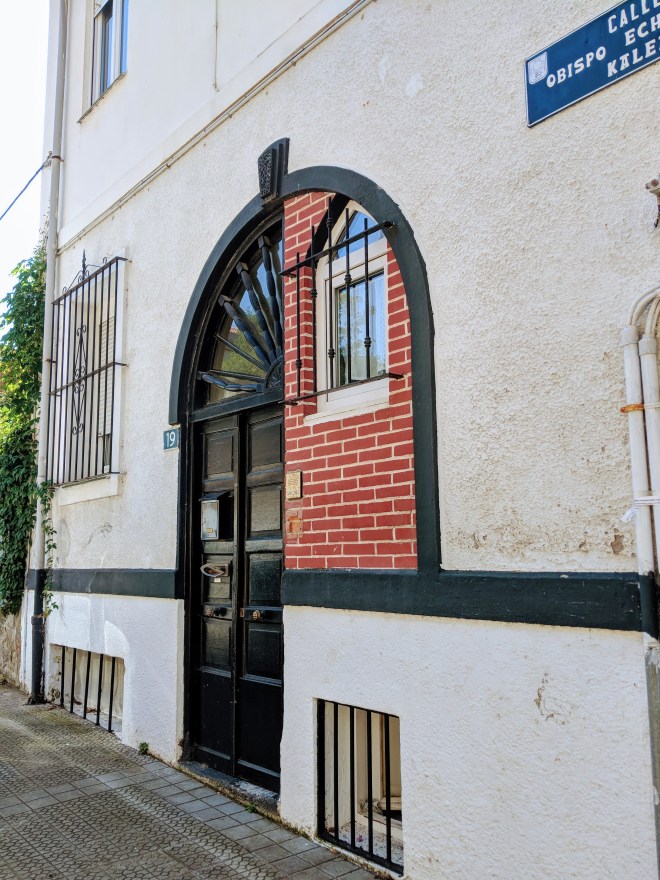
Getxo: After getting my fill of Bilbao, I headed to a suburb on the sea called Getxo. It’s a laid back town with lots to offer. They have a charming fishing village with its own sand beach and the town seems to be a close knit community, self sufficient away from the larger city.

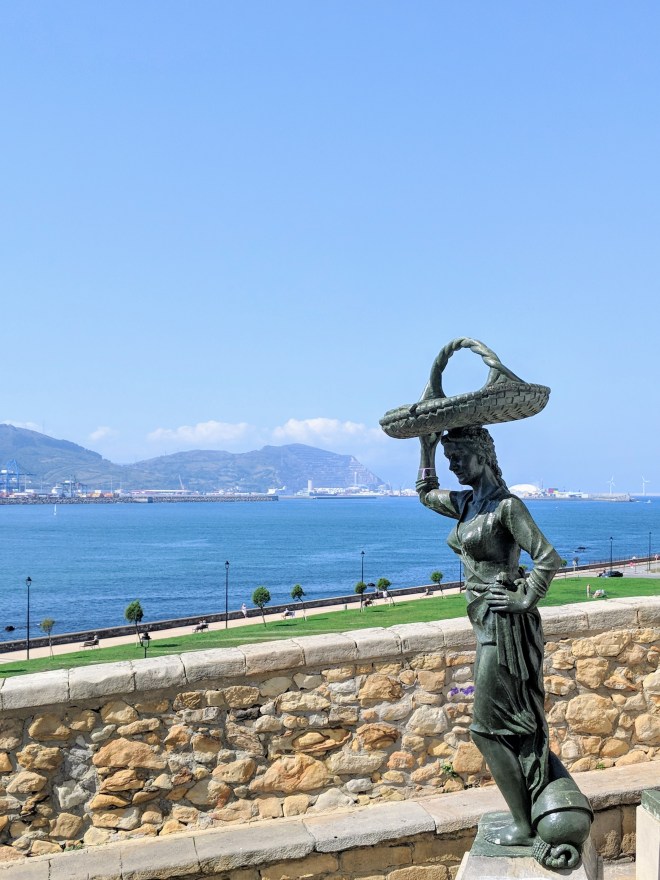


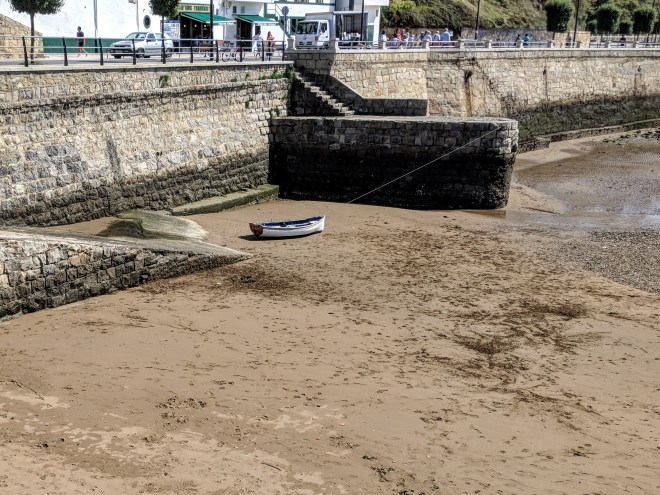
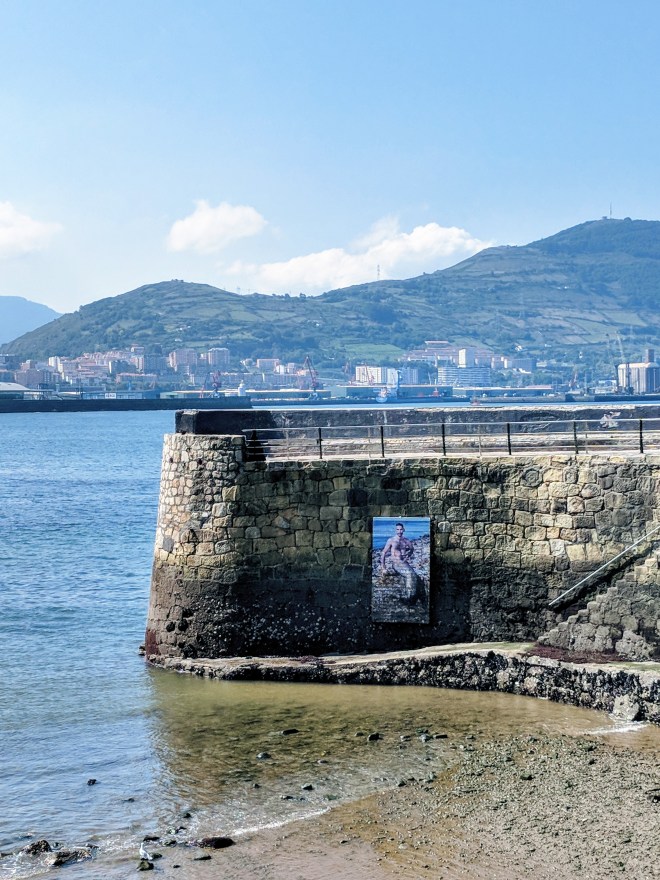
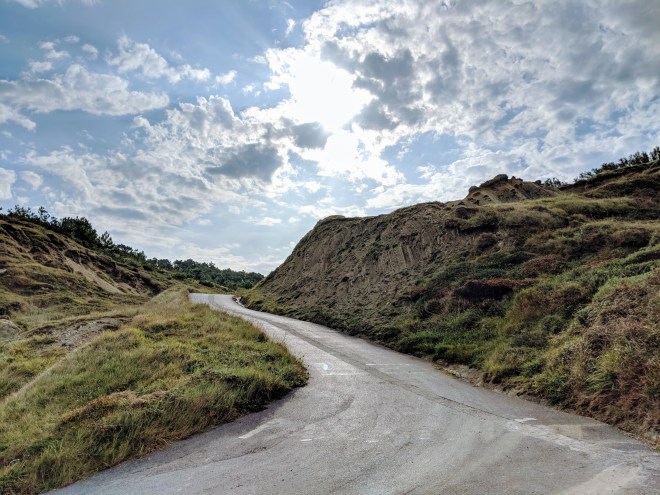
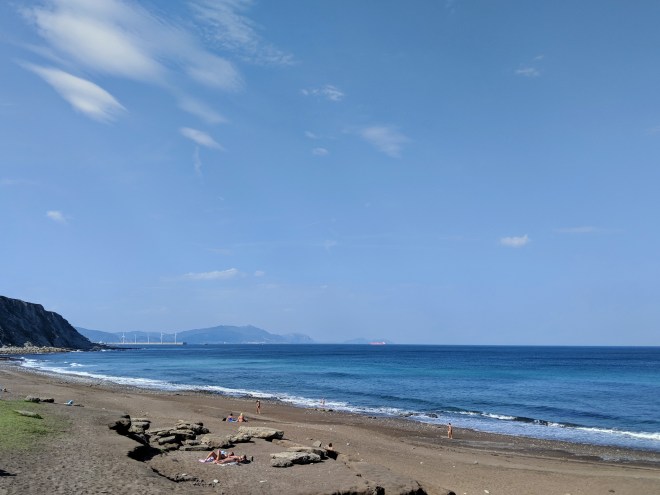
There are multiple beaches to choose from and I inadvertently but happily spent my beach time at the nude one. The walk to the beach was everything I’d hoped for. After finding my way through town and over the rolling hills and countryside, I found myself just drifting. There was something to see or smell or feel at every turn. Once I made it to the beach, it felt like the cherry on top instead of the actual goal.
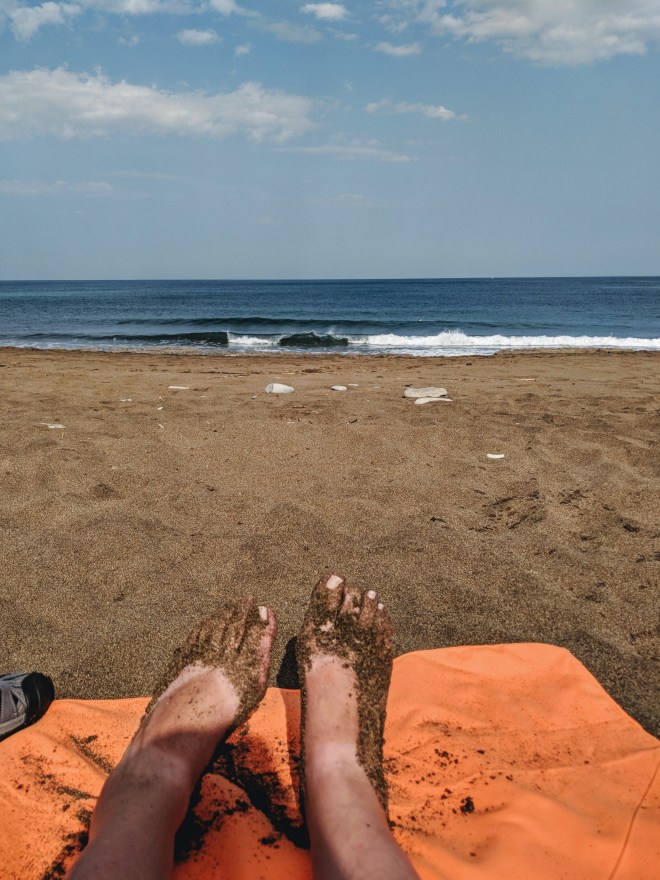
It was amusing to watch the phases of nudity throughout the day and of course everyone was respectful. The early crowd consisted of mostly brazen older men but as the morning petered out, couples of all ages started dotting the beach, only a fraction of whom did not take their clothes down to the nubby bits. By noon, the solo men were entirely gone, replaced by the younger women who came to bask in the sun without getting tan lines. It was absolute entertainment and after getting my fill on the Bay of Biscay, I trudged back up the hill in search of food.
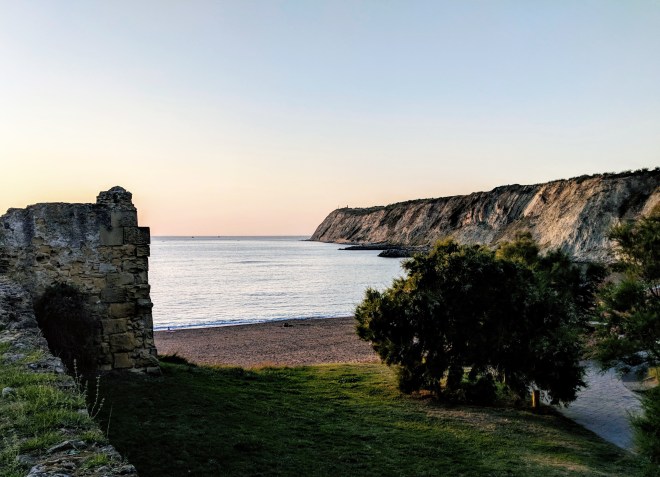
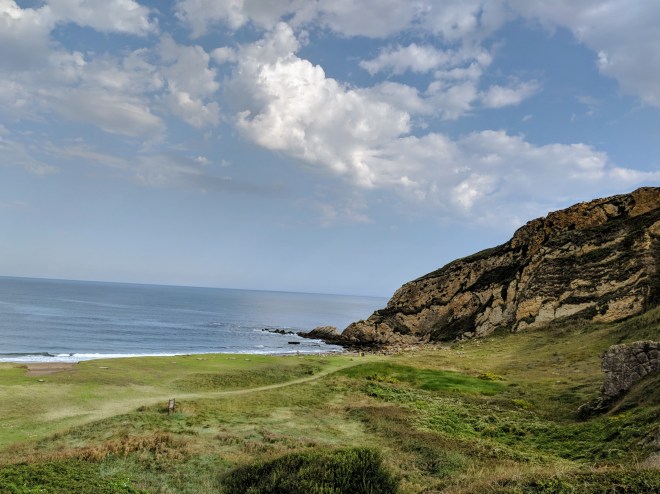
The restaurant at the top of the hill overlooking my beach was part brewpub, part food truck and I was exceedingly happy to find actual tables at which to sit and partake. Starving, I pointed at an item on the food truck menu named “morcilla” and asked what it was. When the girl behind the counter couldn’t find a way to describe it to me, I just asked if she liked it. Since she lit up like a house afire, I figured I gotta get me some. Well, turns out, it’s Spain’s version of blood sausage and it was out. of. this. world! I have tried many other versions of morcilla since that day and they’ve been great, but this one – my first – after swimming and sunbathing for hours, was AMAZING!

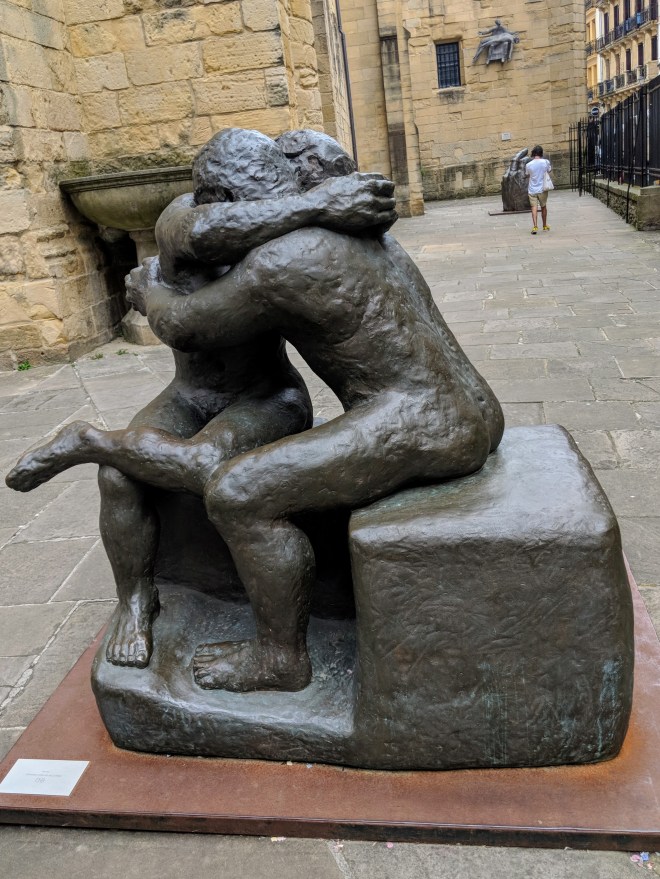
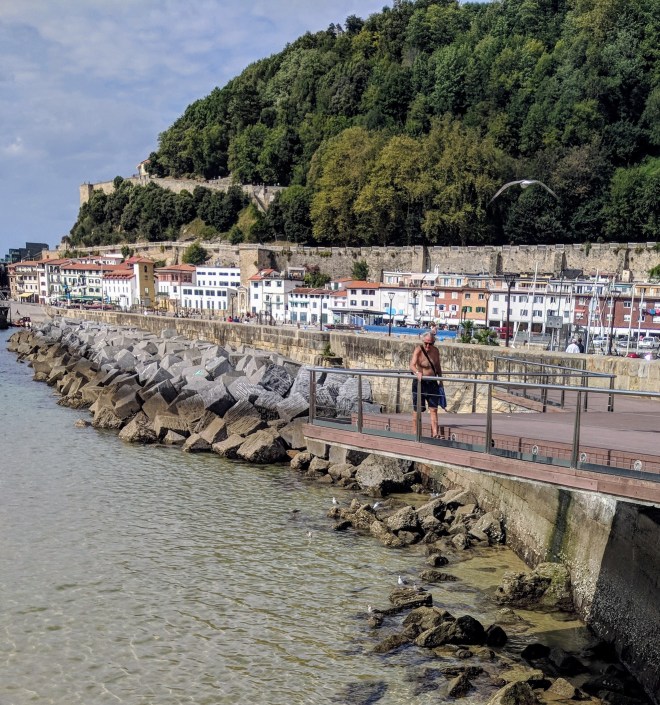
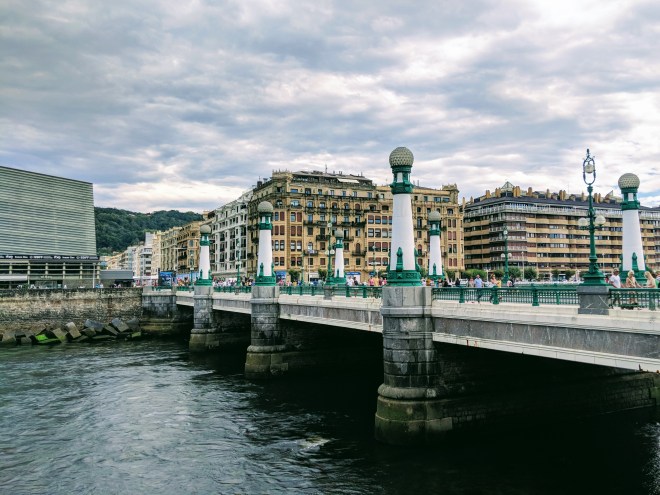
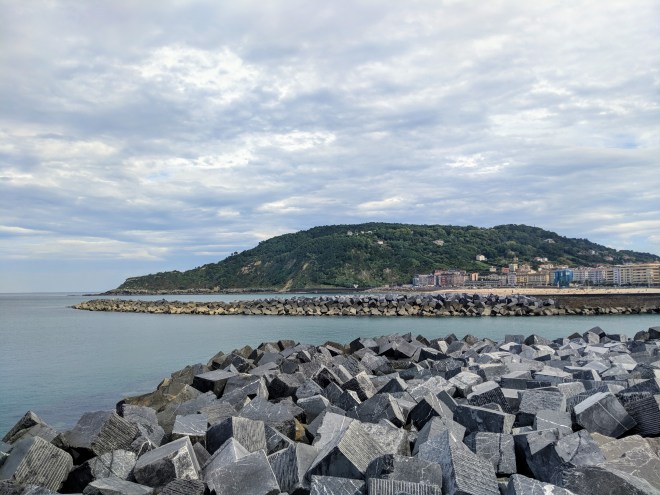
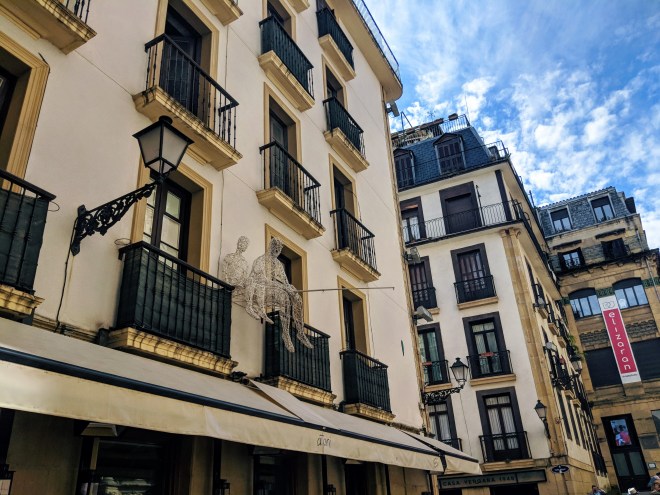
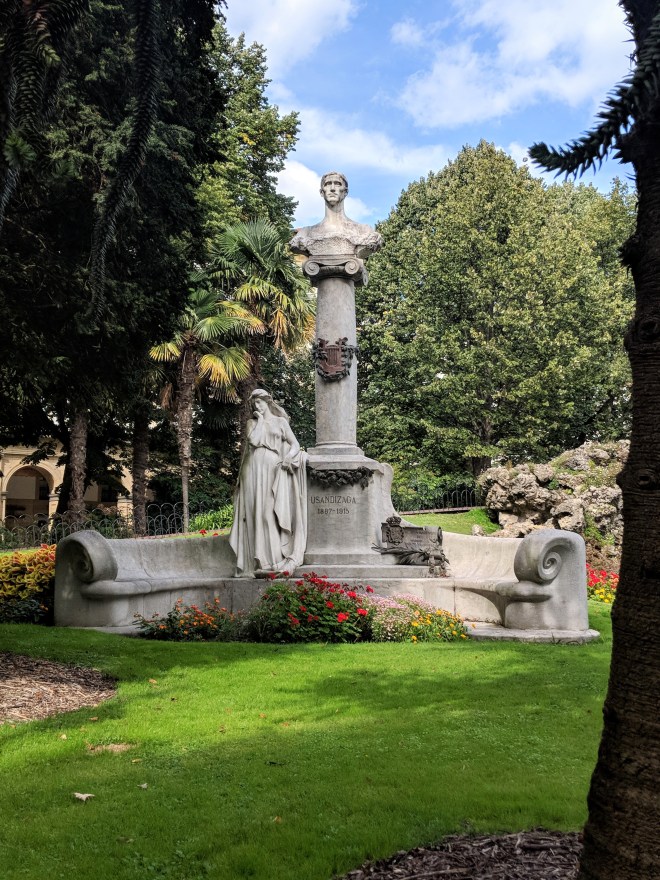
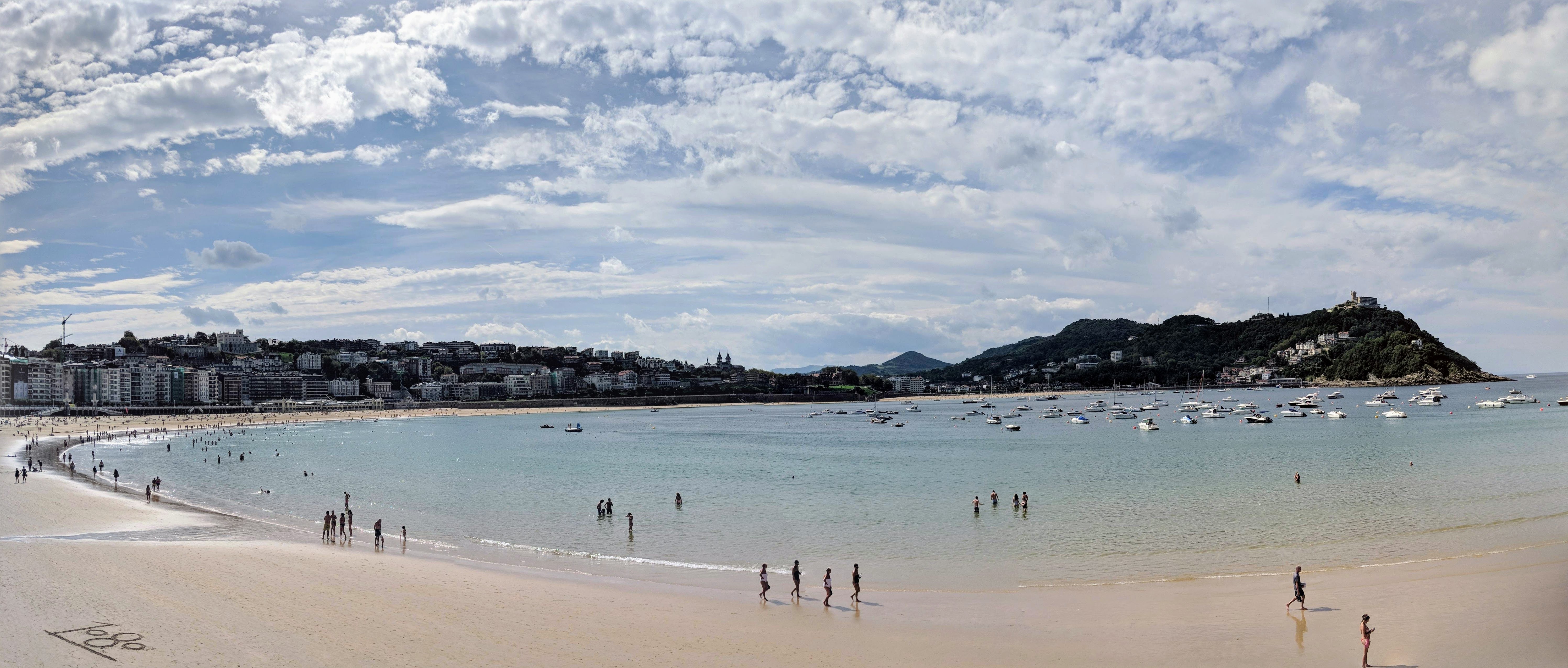
San Sebastian: Many people have San Sebastian on their bucket list for Spain because of the phenomenal food and gorgeous beaches. I was lucky enough to spend a few hours in this beautiful city, gateway to Northern Spain. From the giant square boulders framing the seaside to the delectable food; the calm waters of the bay to its quirky little details, this place was enthralling! Though I didn’t get a chance to learn much about the city and a few hours weren’t enough, I can absolutely see why it is so popular.



Tourist fishing 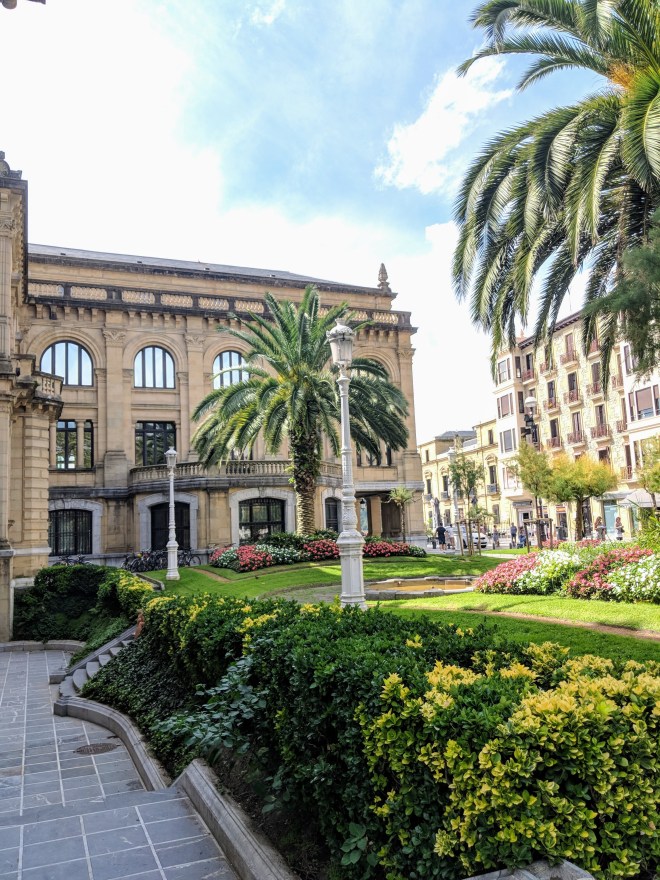
 Exploiting Life