

Wrocław, Poland has around 650K people living there so this could render it a small city, a big town… or just “home”. The fourth largest city in Poland sits in the southwest corner of the country in the region of Lower Silesia. It is not the big metropolitan capital of Warsaw which everyone is familiar with, it’s not on the sea with Gdańsk, nor is it Kraków, the up and coming “it” tourist spot. What it is can’t be summed up easily, so I’ll walk you through what I experienced over eleven days and you can decide whether you agree Wrocław is as absolutely wonderful as I believe it to be!
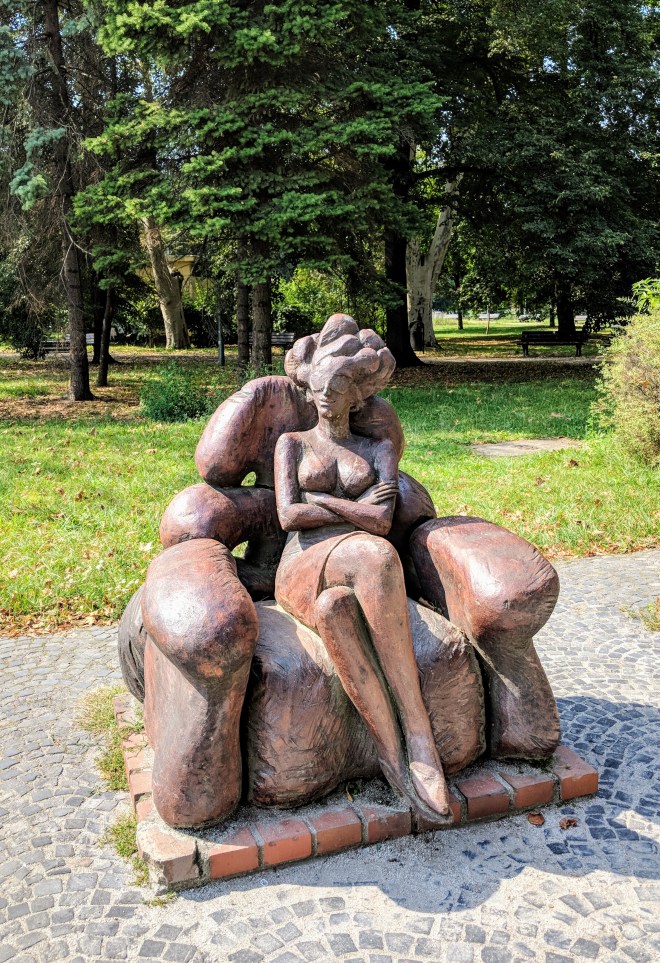
WROCŁAW: Let’s start with how to pronounce this guy. I won admiring glances from every resident I met each time I tried to get the nuance right, whether I did or not didn’t really matter to them. 🙂 In English, it’s easy to think the first W is silent, the letter after C is an L, and therefore the first part of the name sounds like what you do in a boat and the last part sounds like the feisty part of a cat’s paw. RowClaw. Nope! Some of this will click for those who’ve had exposure to languages other than English, but it was still a rough one for me to wrap my head around.
Here we go! In Polish, a W in the beginning of a word sounds like a hard V and in this case, the O is hard as in oh!?!? Easy enough, right? Vroh… Okay, now, that C is the common but pesky *ts* sound. With me so far? Vrohts… The next letter is not an L, but an Ł which has a W sound. Woot! This is where we are: Vrohtsw… The A is the A from ah. Vrostwah… When the W is at the end of a word, it’s softer, almost like when a V and an F have a baby but V is the dominant parent. Vrohtswahv. Play with it. Try it out loud. Let it roll around on your tongue (and lips and teeth). Then go back to hearing RowClaw in your head anytime you see it written like most English speakers do. Nobody will judge you.
History and Old Town
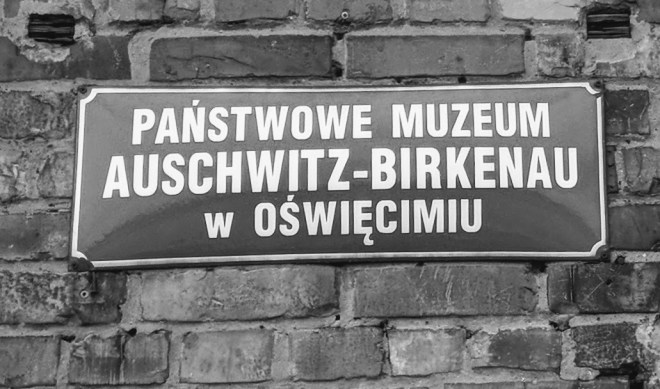
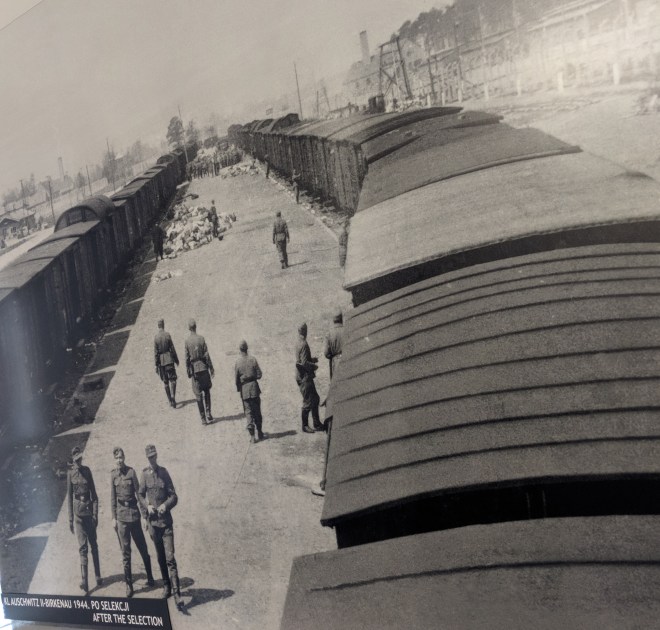
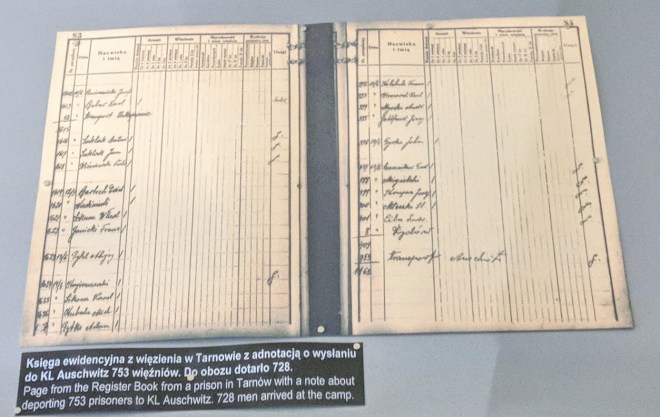
Auschwitz: You all know what happened here and honestly, after visiting and seeing the ghosts of horror, I will leave you only with some photos before moving on. Below reflects Auschwitz I, which was originally a Polish military base, and Auschwitz II – Birkenau, which is the notorious concentration camp, specifically built for its gas chambers and to follow up, crematoriums. The innocent people who were put to death because of the beliefs of one solitary lunatic need to be remembered and their lives respected.
Transport of doomed innocents to the camp


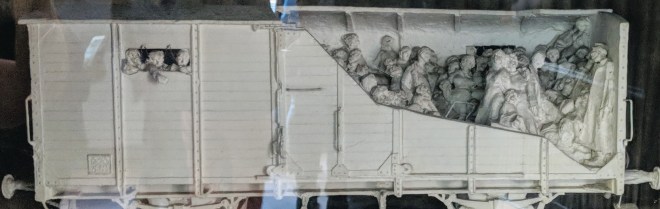
Some were more than 30 continuous hours in transit
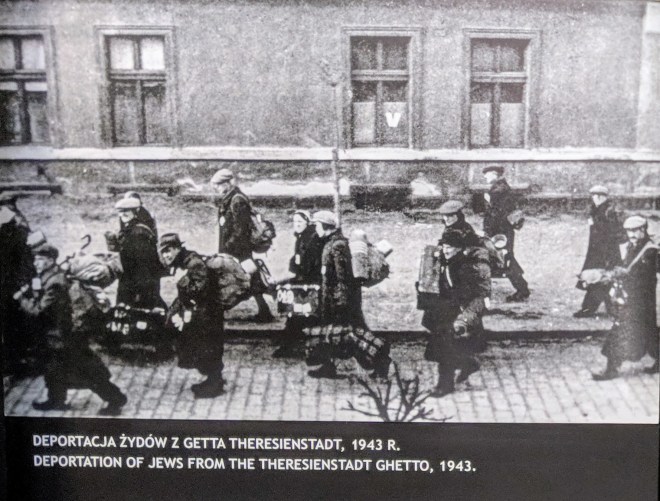
Import and Selection of those who would be put directly to death vs. sent to work before death




Auschwitz I


Watch tower 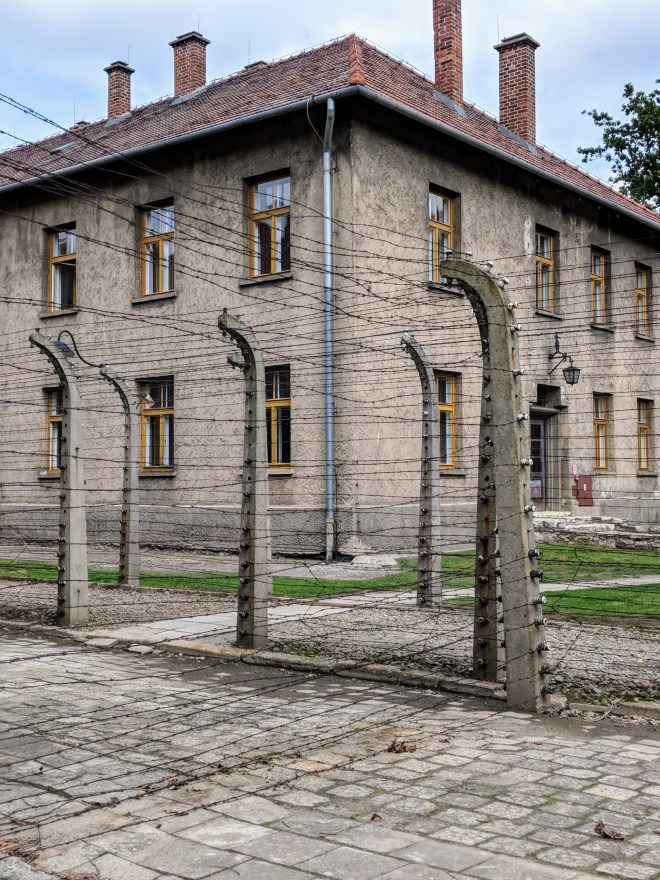
Auschwitz II – Birkenau


Kitchen in Birkenau 
As far as you can see, this continues 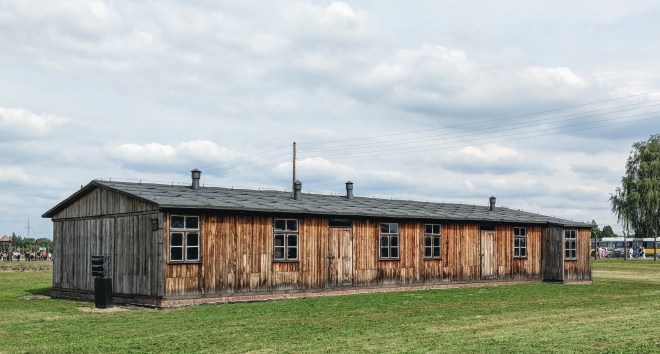
Wooden when speed of erection was paramount 
French Memorial on site 
One women’s barrack; 5 women on each board
Never forget these were people

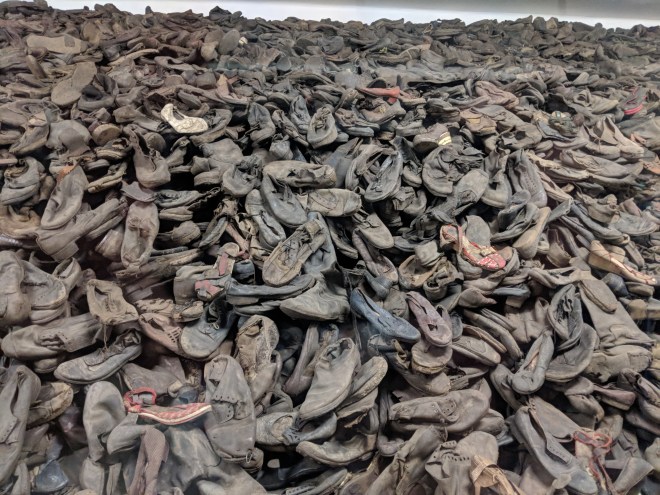

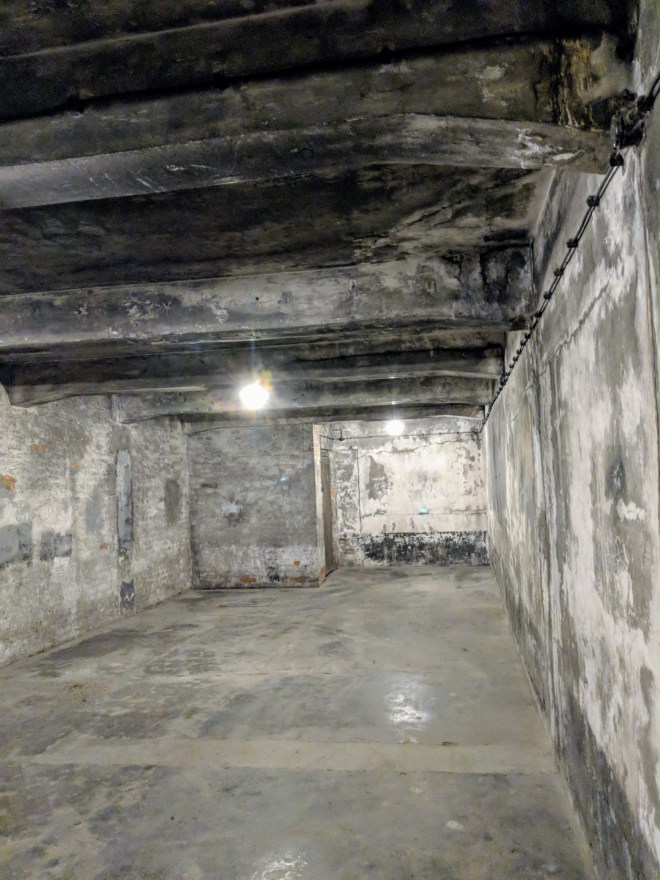
Gas chamber where pellets of poison were dropped in through the ceiling 

Hitler bombed this crematorium at the end of the war to cover his atrocities
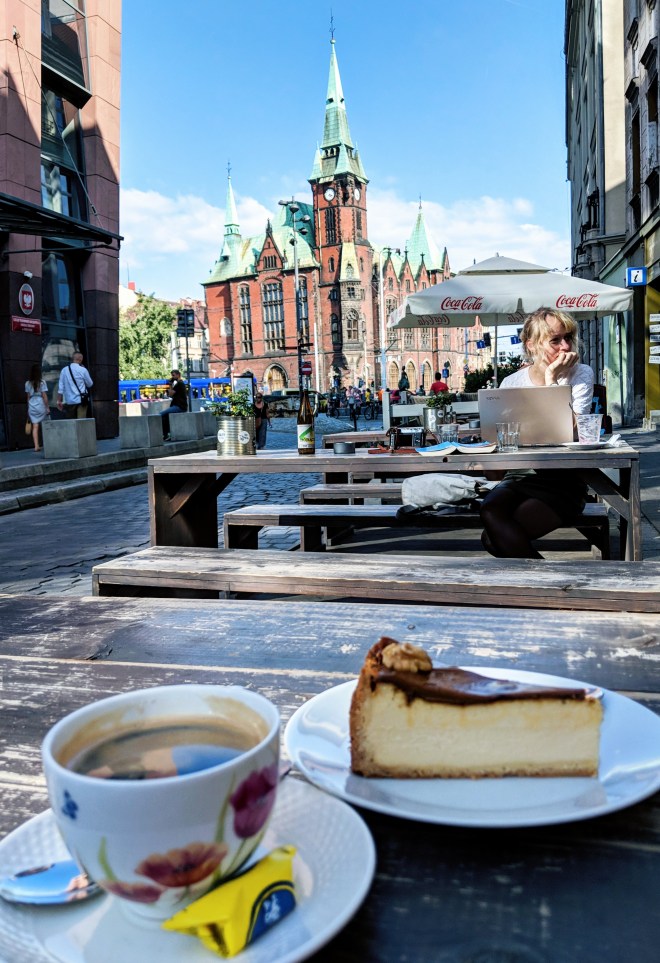
Old Town: Most of Wrocław was destroyed in WWII so much of it has been rebuilt in the past 70 years, and even then, a lot of the reconstruction wasn’t finished until after Russia took its leave decades later. The reproductions are very well done and worth taking the time to stroll through with a coffee and pastry. There is a row of buildings in the town square which weren’t destroyed and which have been lovingly kept up all these years. Not only is the portion you can see beautiful, but they also boast up to 8 more floors below ground level, having had multiple uses throughout the centuries.

Intact through WWII 
Destruction 
24hr Flower Market Old Town 
Old Town colors
Wrocław isn’t a very religious city and that’s visible through some of the art found in Old Town which can be read as “take your religion and shove it; we don’t want to fight about it”.
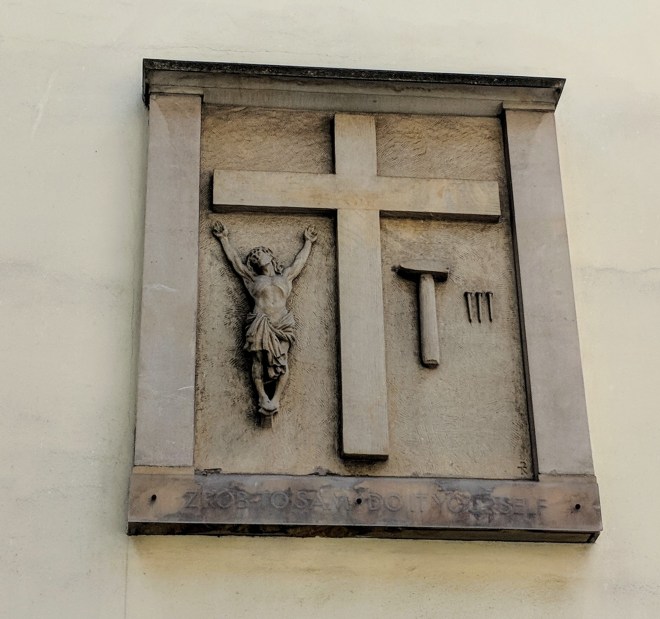

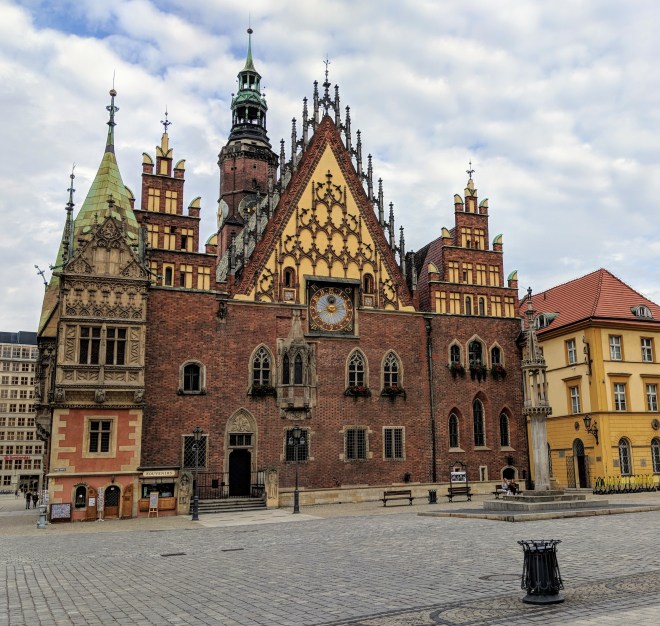
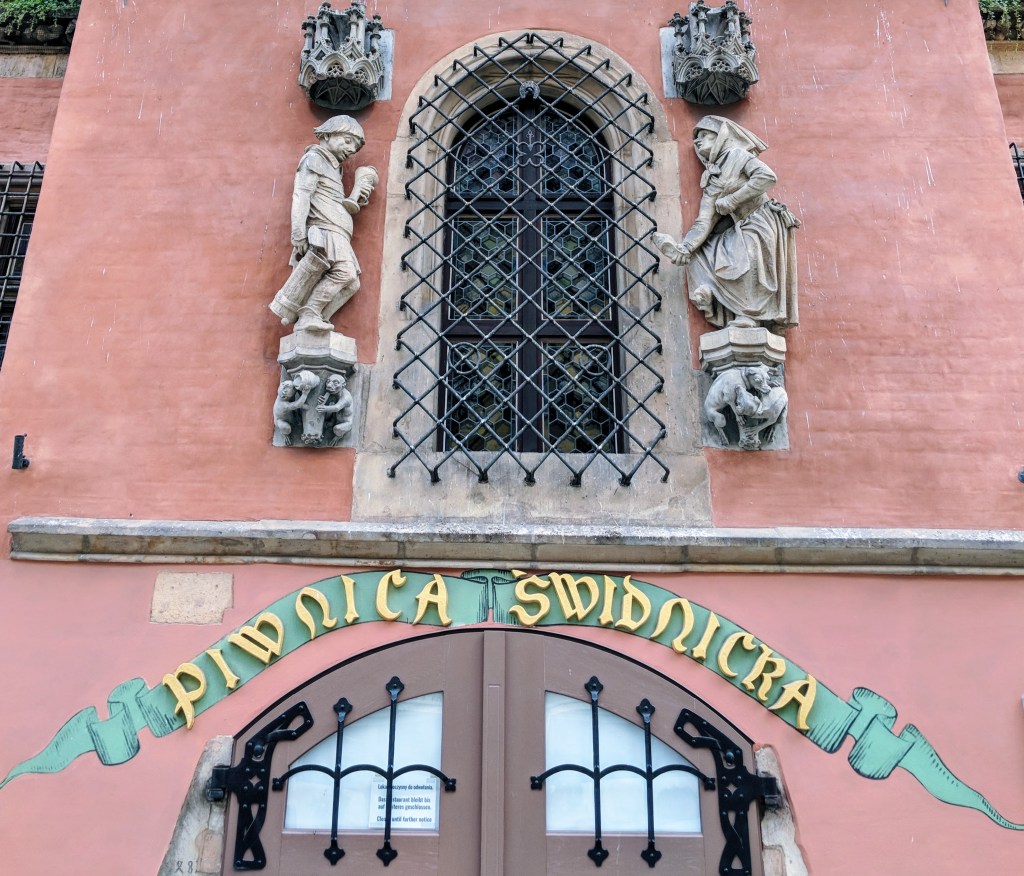
Old Town is located in the center of the larger city, bordered by the Oder River on the north and major transit thoroughfares around the rest of a circle. In the middle of the area is the Town Hall where in the basement, if the lessee had paid his rent over the last 9 years and it wasn’t currently closed, you could also have visited the oldest pub in central Europe – Piwnica Świdnicka. The pub was first referenced in city records in 1273 and its facade is still flanked with a drunk and his wife preparing to throw her shoe at his swimming head.
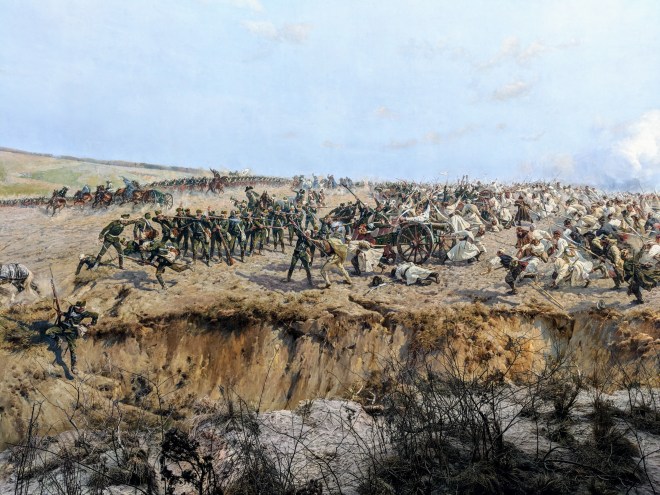
The Panorama of the Battle of Racławice is a fabulous painting of an epic battle during the uprising of Poland in 1794 where the insurgent Poles were victorious over the Russians. Though the rebellion ultimately failed, this battle became a symbol of strength and promise. What I loved about this installation is the creative use of texture back when it was realized – 100 years after the attack – in 1873. It’s an impressively sized canvas of 15m (49f) x 114m (374f) and housed in a special rotunda built solely for its display. They’ve even added tactile elements to heighten the 3D effect of this important historical artifact. Not only is this super cool to look at, but the lengths to which Poland has gone to safekeep and restore the treasure shows so much pride and resilience.


The FOOD
I had trimmed the waistline a bit before getting to Poland, mainly from excessive walking in the Baltics, but there is no amount of walking I could do to account for the vast quantity of Polish calories I can shove in my mouth per day.

Traditional: Pierogies – dumplings of pasta surrounding any kind of filling you like, but the most common is the pierogi ruskie which consists of potatoes and cheese. Yes, you read that right, potatoes and cheese surrounded by pasta dough and boiled (most popular) or fried (my favorite) and served with a big dollop of sour cream. Other popular fillings are champignon (black) mushrooms because mushroom hunting is a popular pastime in the country, oh, and because they’re delicious. You can also find almost any meat of your choice in a pierogi. Then, of course, there are dessert pierogies filled with fruits and cheeses. Somebody stop me!
Other traditional foods of Poland include the ever present pork knuckle, which is popular all over the region. Kielbasa sausages, duh. Rustic soups with boiled eggs and, of course, kielbasa. Duck in every possible preparation. Cabbage, onions, and beets, oh my!
Pork cutlet is one of the most popular dishes especially if paired with potato pancakes (three cheers!). Don’t hesitate to try the kopytka which is like gnocchi on steroids with its perfect balance of flour and potatoes mixed into a medium sized dumpling and topped with your choice of gravies or dropped into a savory broth. There are wonderful cafeteria style restaurants, easily found throughout the city, where you can just fill up your plate with anything that looks appetizing and I was never disappointed.
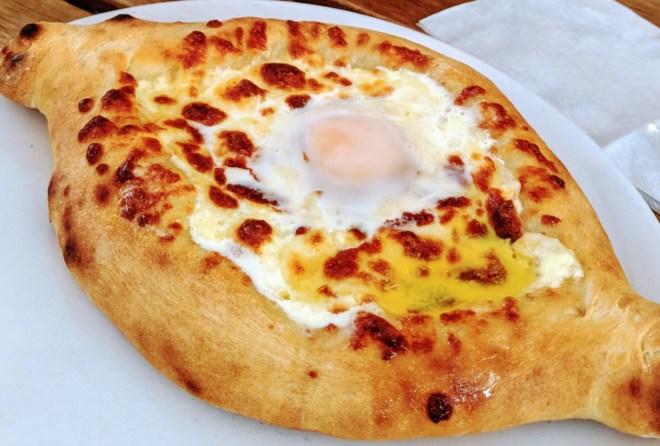
Foody: Wrocław is quite international and progressive so the food available once you step outside the bubble is eclectic and they do it well. There’s a Georgian (country, not state) restaurant I admit to having frequented where a wonderful meal is simply a tomato cucumber onion salad with a side of khachapuri which is a boat shaped out of well seasoned, chewy pizza dough, the center of which is filled with Georgian cheese, a pat of butter, and a raw egg which cooks itself in front of your salivating face.

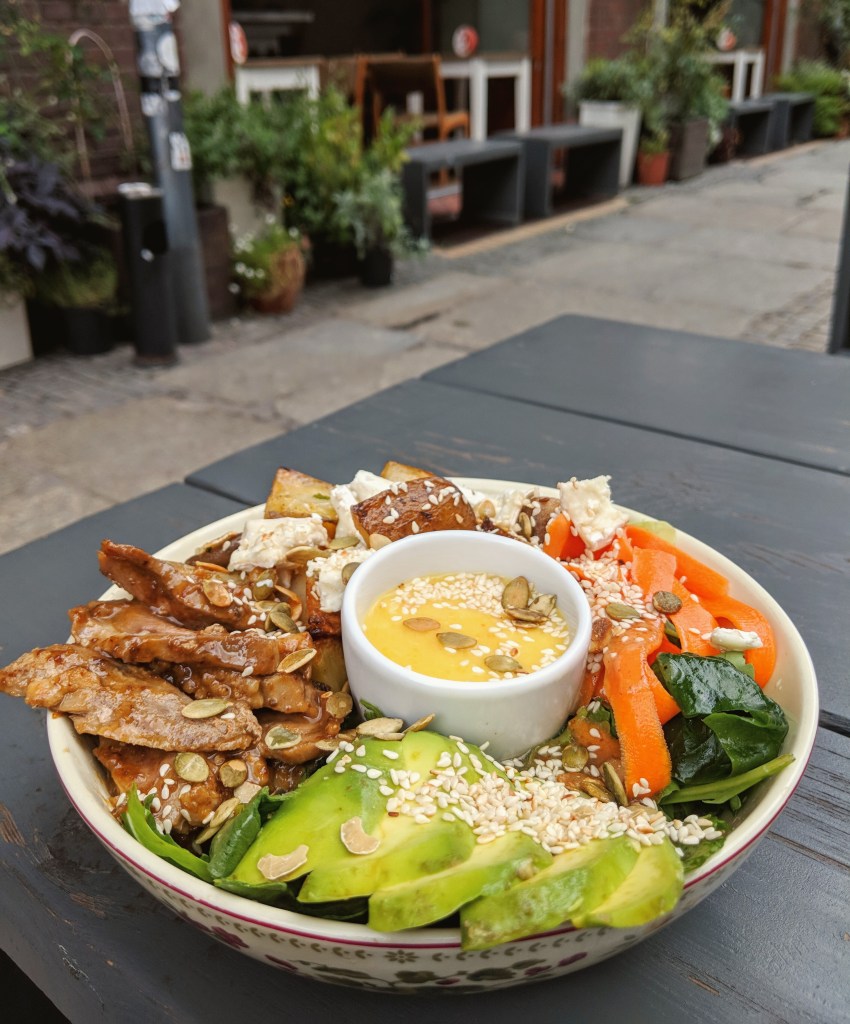
I could seriously make this a 12 page post just on the food of Wrocław, but I’ll stop after this list of awesomeness: Hummus (amazing and so many choices and presentations!), mango sauce, BEER, Thai influences, pastries, goulash, dense gravies, light fresh lemonades, and along with the young vibe, TONS of vegetarian and vegan options abound! If you want anything spicy, though, you’ll have to season it yourself or visit one of the many flavorful Indian joints in town. Needless to say, I must do MUCH MORE walking.
Beyond Old Town
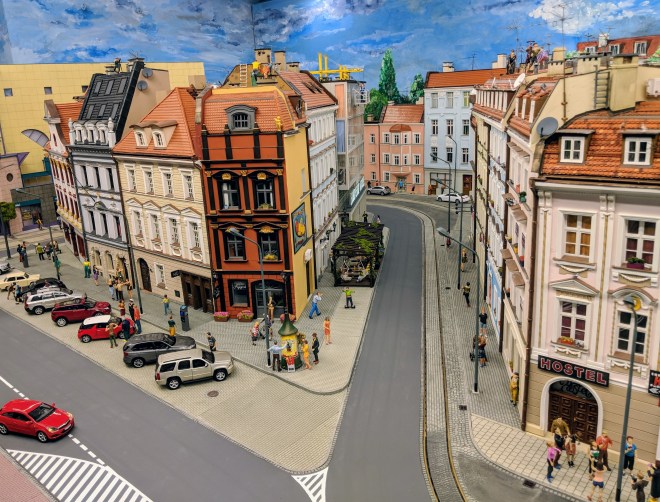
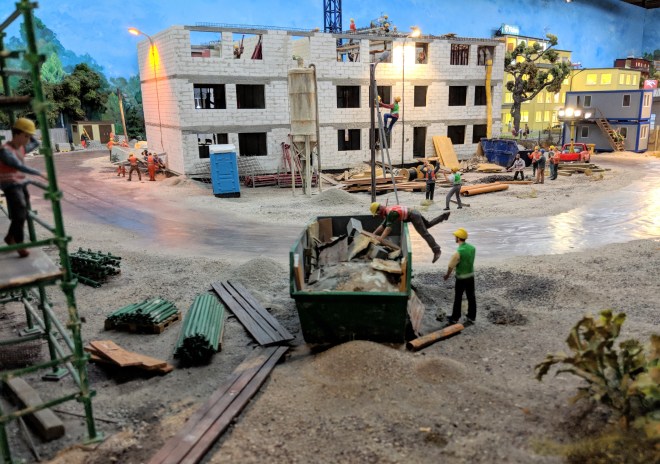
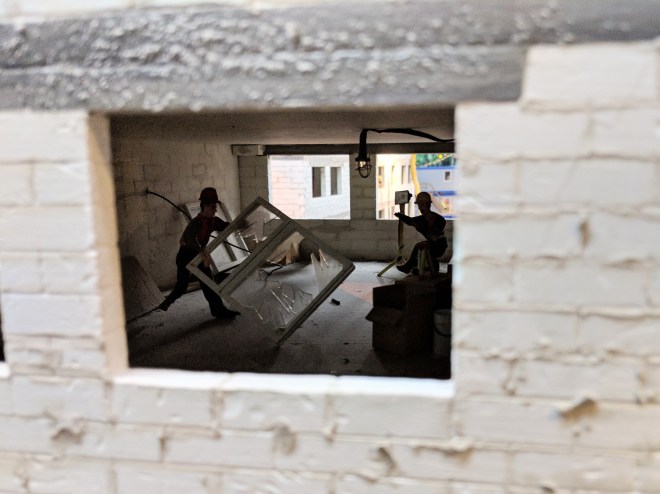
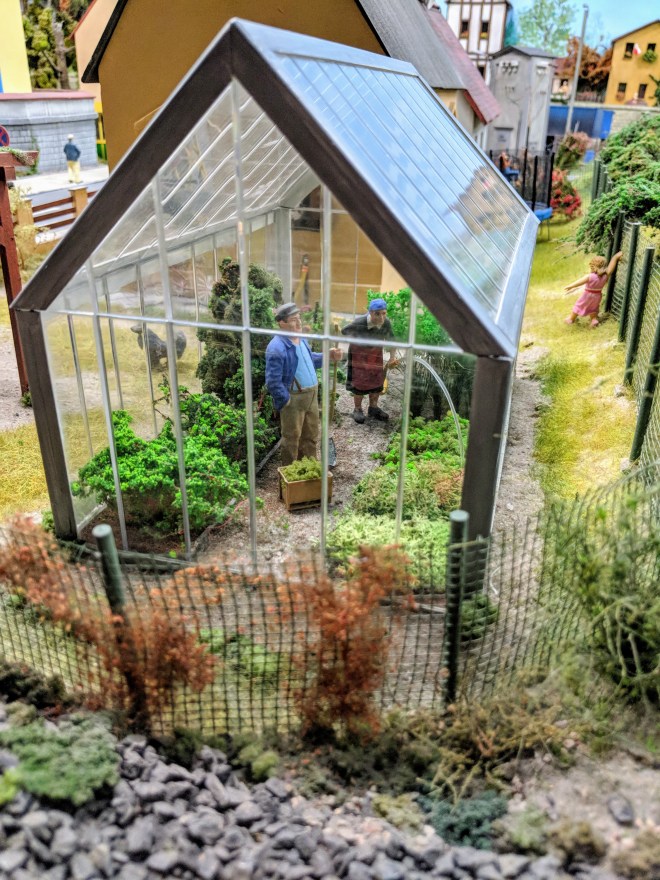
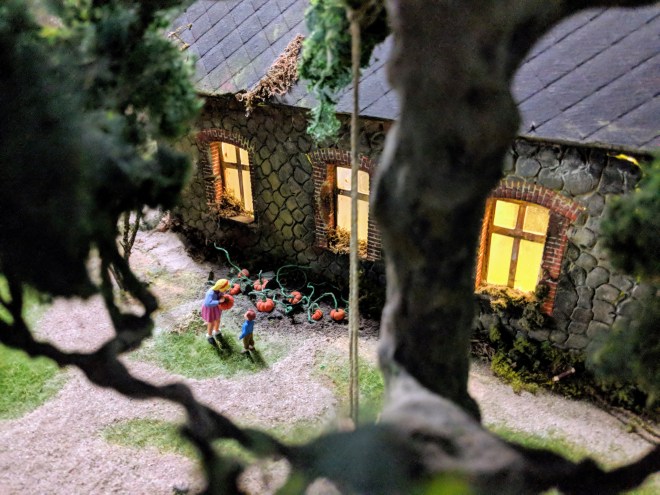
Kolejkowo: Poland’s coolest train set is so much fun! It’s two floors which splendidly capture life in Wrocław to extreme detail. They’ve perfectly recreated Old Town, included the numerous construction zones throughout the city, represented country life, and simulated the various neighborhoods which make Wrocław so stinkin’ awesome. Trains and cars run at regular intervals with all the bells, lights, and whistles you’d expect from a stellar toy. Yes, there were tons of kids there, but lots of us adult kids were squealing with glee, too!



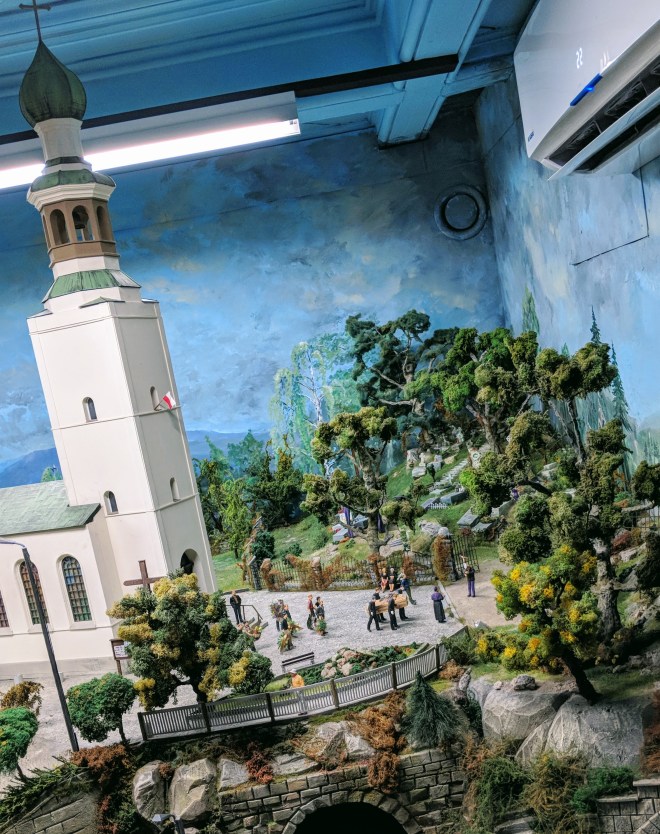
Funeral service 

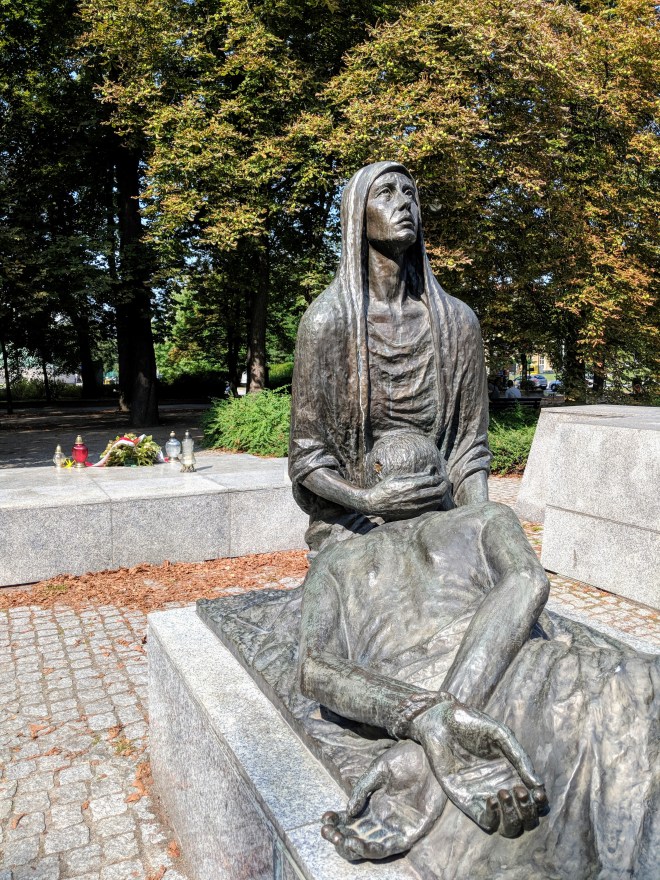
Coffee and Comfort: Having just completed the Baltic route, I was super excited to be in a place which doesn’t consider “coffee in a cup” (instant coffee) sufficient. I was finally able to sit down to a nice cup o’ joe and even without breaking the bank. Hallelujah! Once the atmosphere of Old Town has been sufficiently enjoyed, the rest of the city just feels cozy and comfortable. Don’t get me wrong, there is plenty of history to keep a person depressed if they look hard enough for memorials, but ultimately, this place is upbeat and friendly. It’s not unusual to wave at sailboats on the river, whether or not you can say Wrocław.
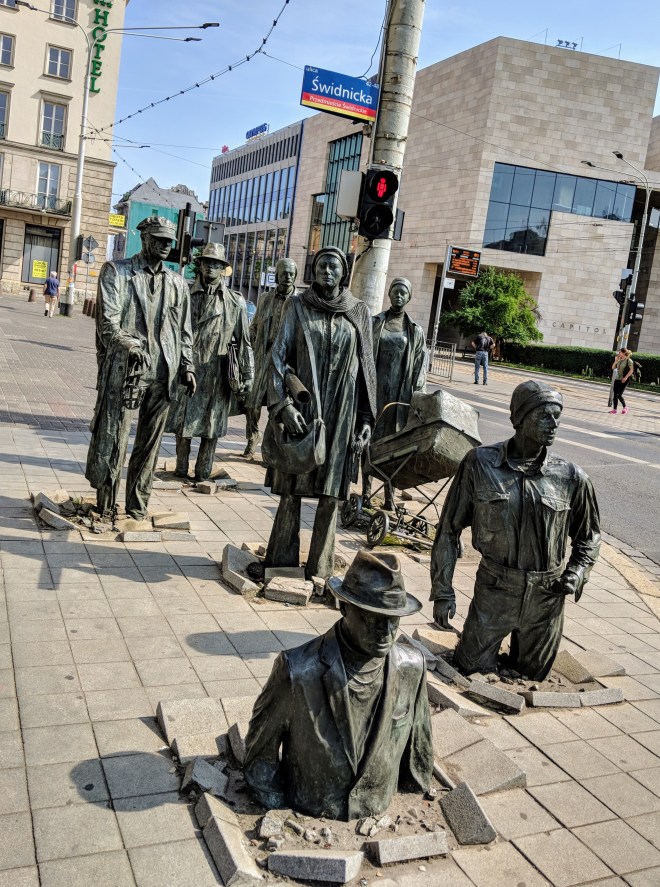
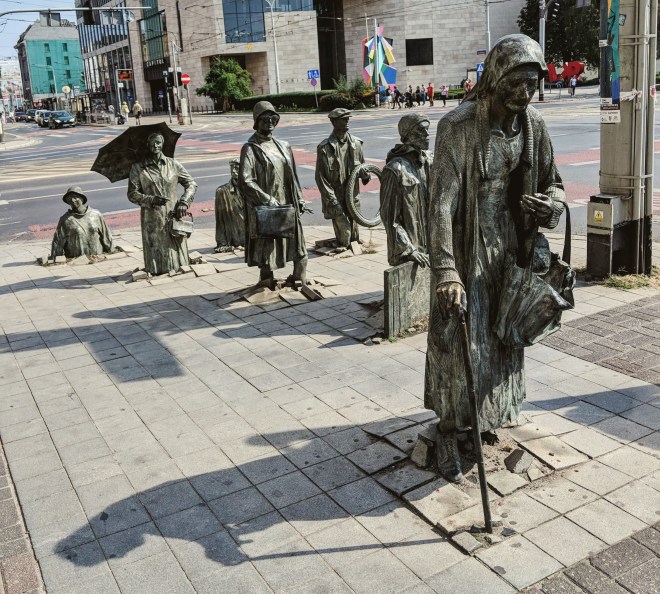

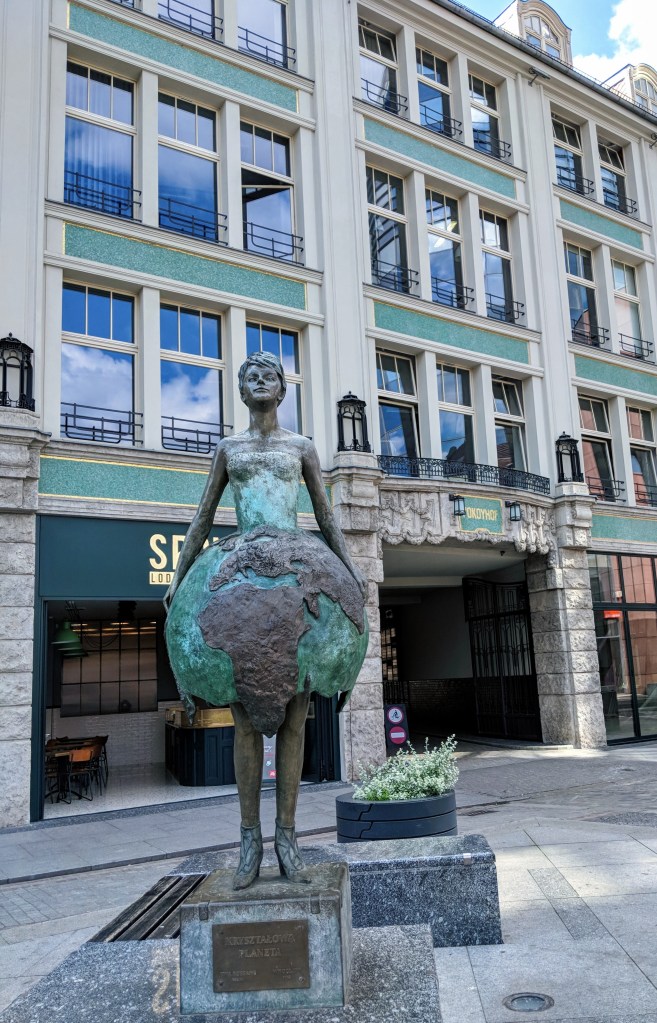
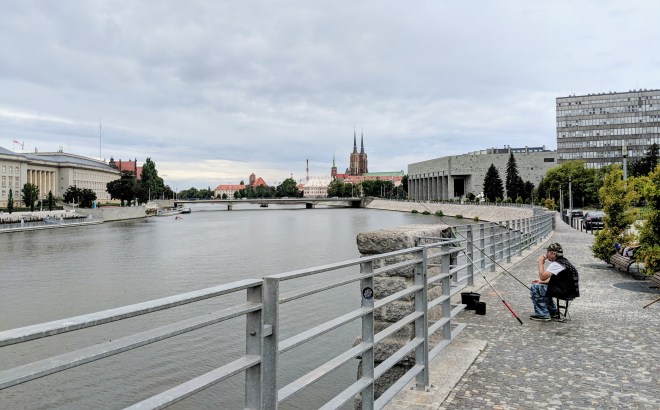

Not all the cool buildings were built centuries ago, either. There are plenty of modern things interspersed among your traditional beauties like the National Forum of Music where the Poland Philharmonic plays. There’s also the row of hipster restaurants and shops under the railroad tracks which serve up great grub (can you tell I already miss the food?!?) and you can find some comfortably weird paraphernalia.


Colors of Wrocław: There is a long history of men giving women flowers in Wrocław with many varied legends as to why. Whatever the reason, the town is overflowing with flower shops, including the big 24 hour flower market which means you’re fresh out of excuses for not bringing home flowers on every occasion. Pretty much on every corner, you’ll see a Kwiaty sign which means there is some sort of living beauty inside just begging to be purchased for a deserving recipient.
In addition to all the flowers, the bridge structures are brightly decorated and art installations in their own right. The first I came across was when I went a-wanderin’ on day 2, then I subsequently couldn’t help but notice each one, the first remaining my favorite. There isn’t any rhyme or reason to their coloring other than to represent the independence of choice after communist rule.

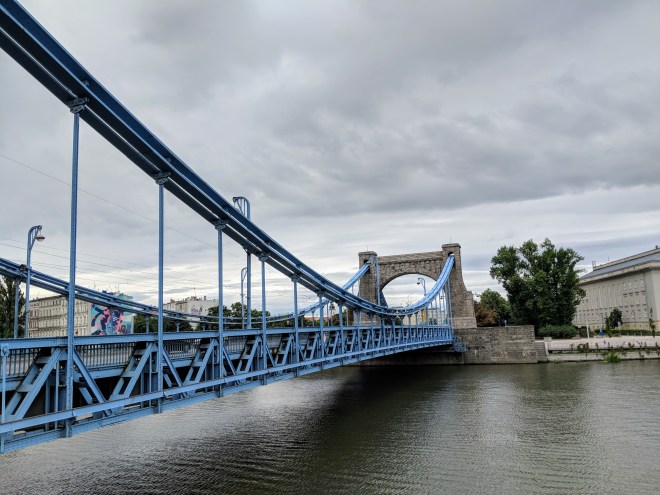
My favorite bridge 
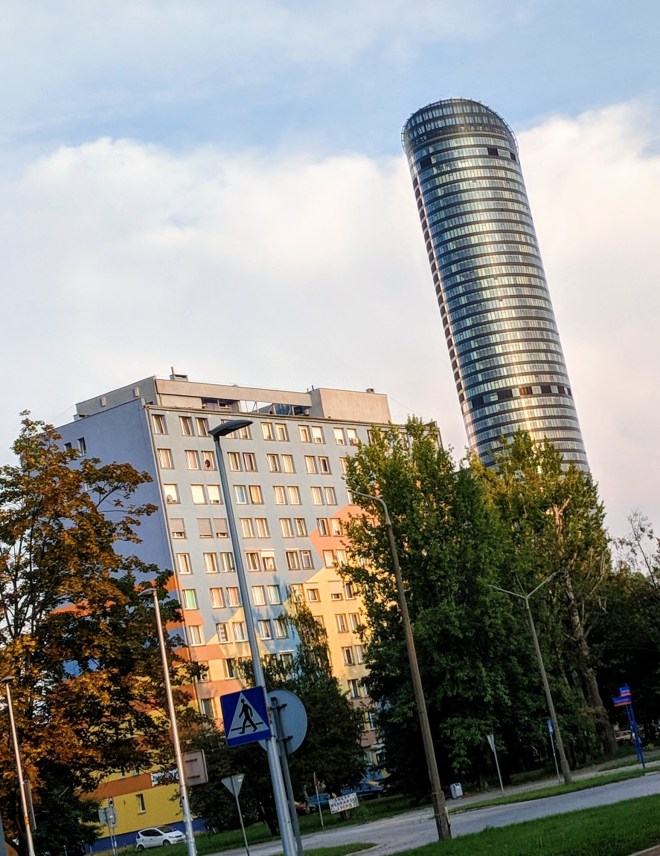
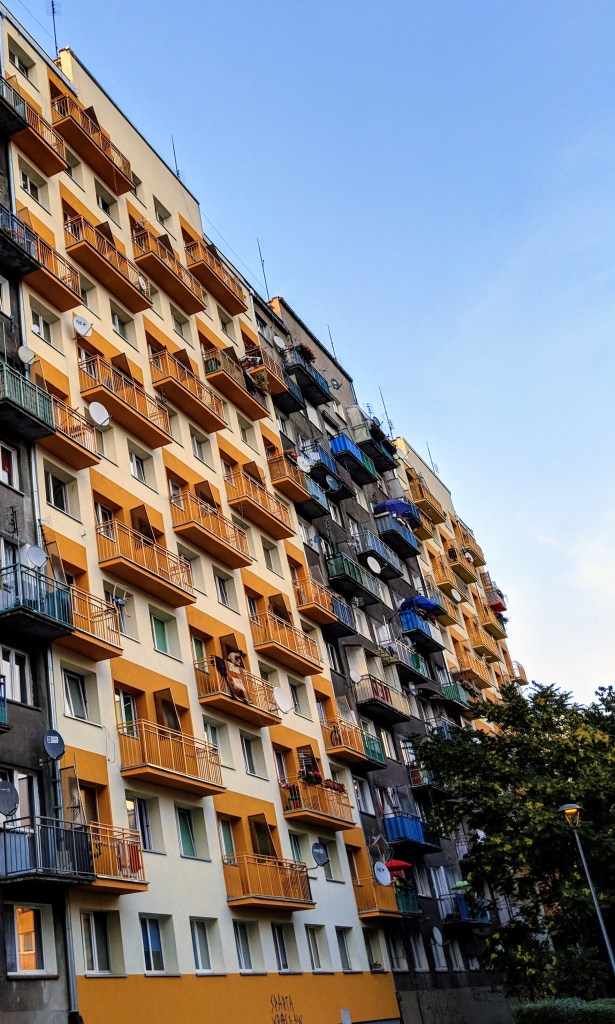
The same goes for painting the tall, rectangular cement apartment and business buildings. Some are rainbow colors, others solid brights, but most often some geometric pattern chosen by the inhabitants. I’m extra thankful for the colors because since the buildings aren’t arranged by grid, getting lost in the kitty corners is all too easy.
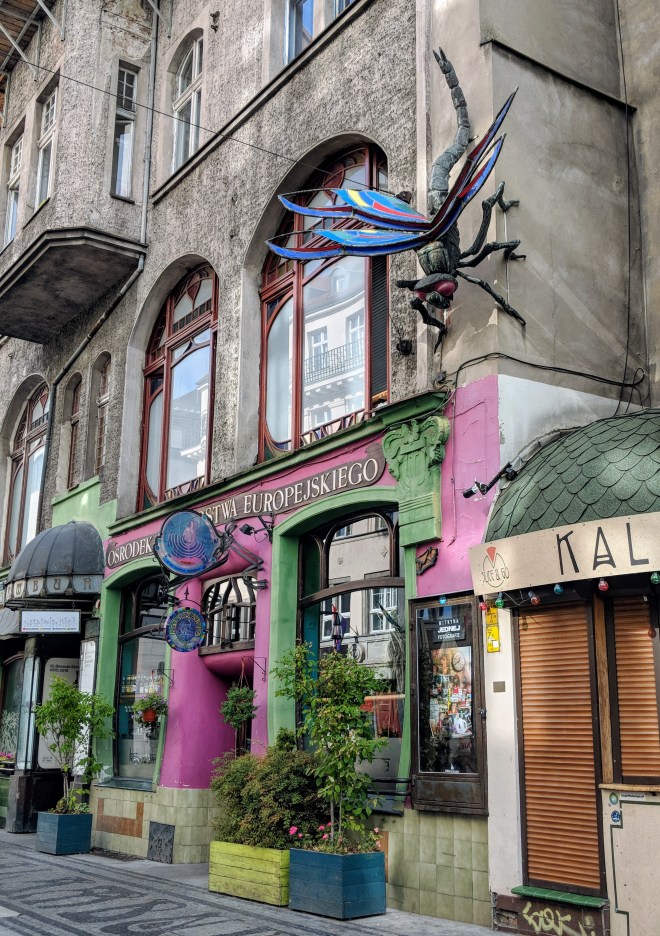
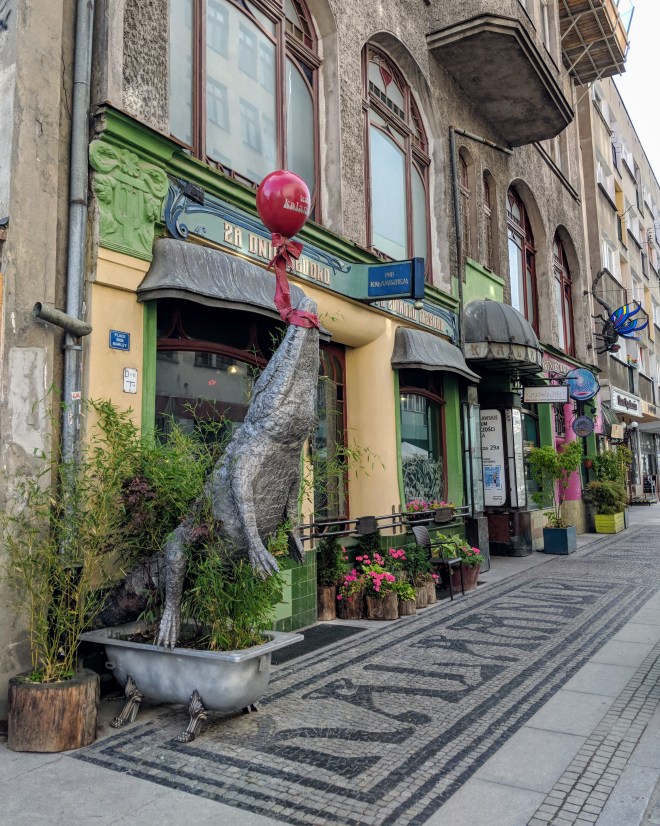
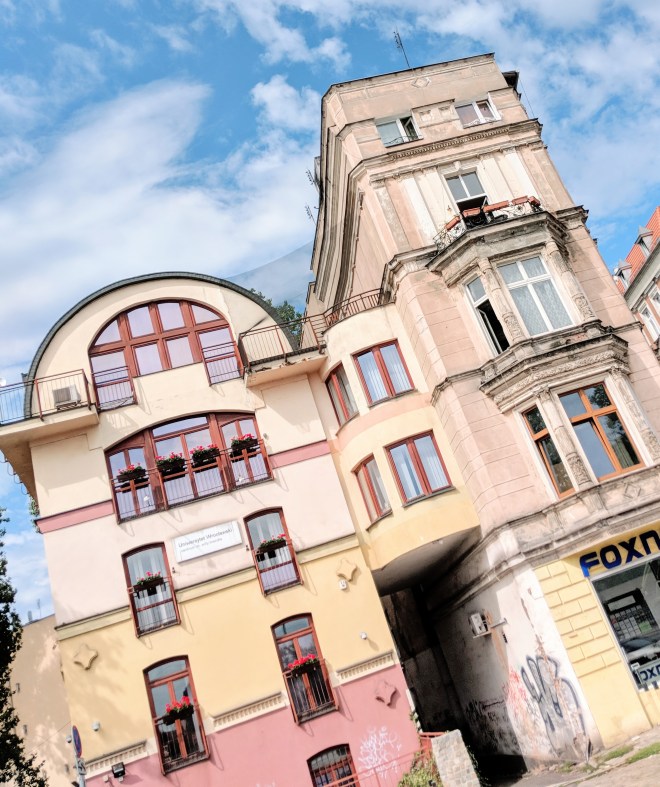

The Ossolineum Library and Research Center is a pretty and red representation of light baroque architecture with the ivy providing a softness to the harder angles and contrasts.


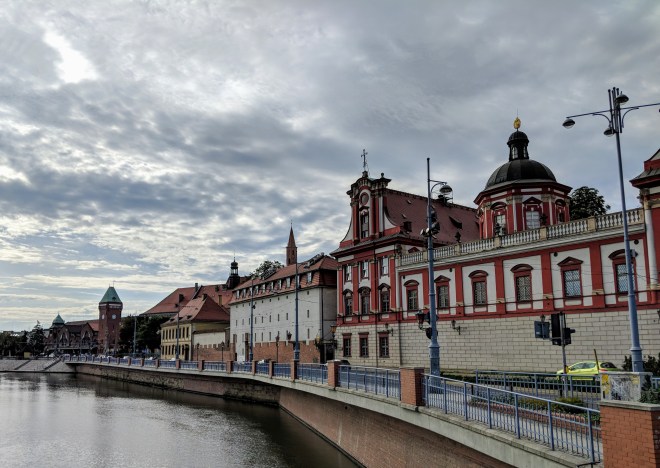
Another beautifully colored location is the National Museum, but the coloring comes from the natural elements of brick and foliage, like many other Northern Neo-Renaissance designed buildings of the 19th century.


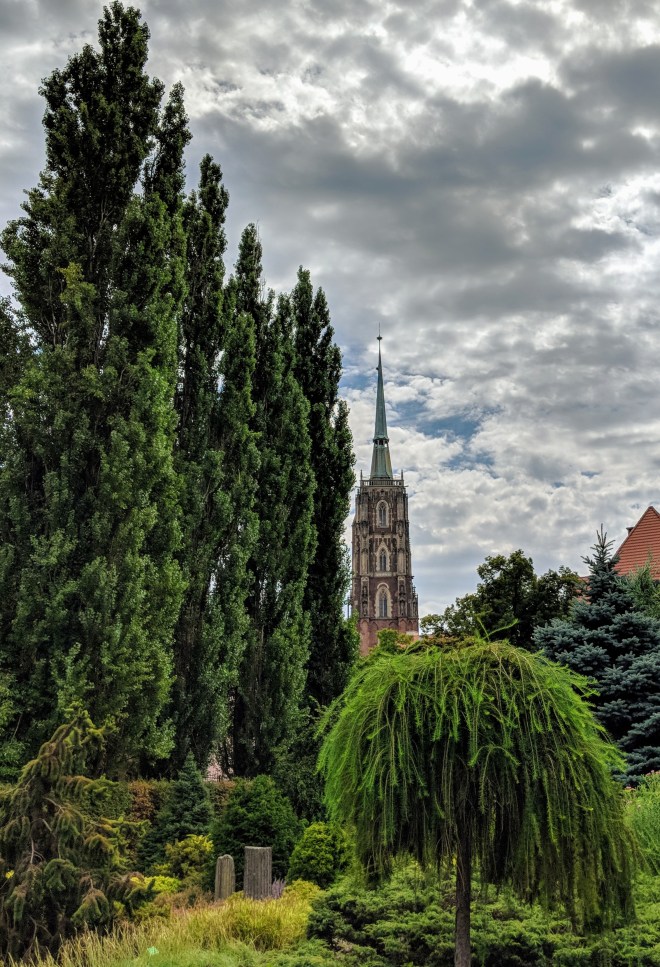
Cathedral Island and University Botanical Center: The oldest part of Wrocław on what is believed to once have been an island between branches of the Oder River is now considered Cathedral Island. This small area is crowded with impressive baroque and gothic cathedrals known for hosting tourists intent on visiting during the day and revelers at night, when hundreds of lamps are hand lit each day at dusk.
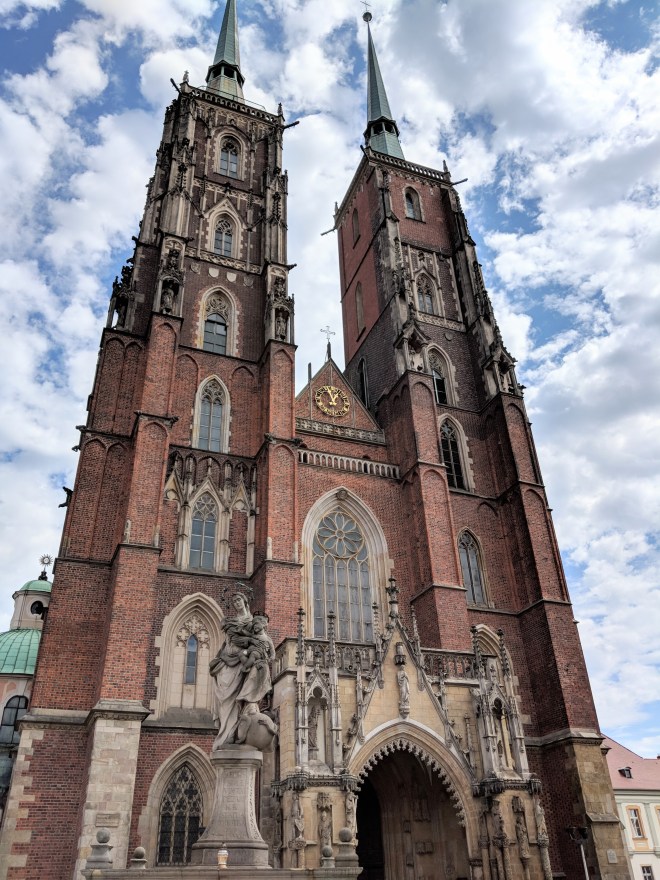


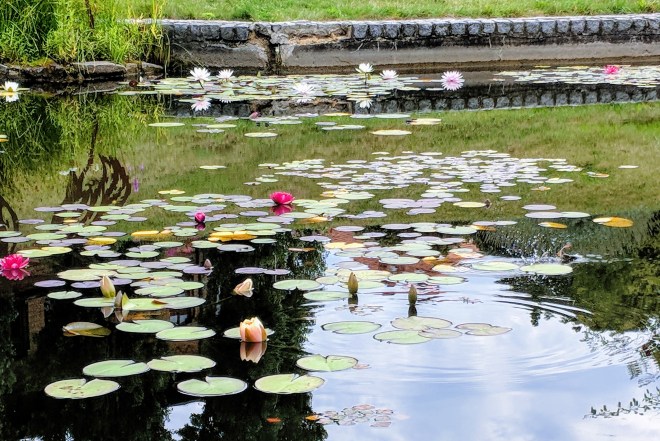
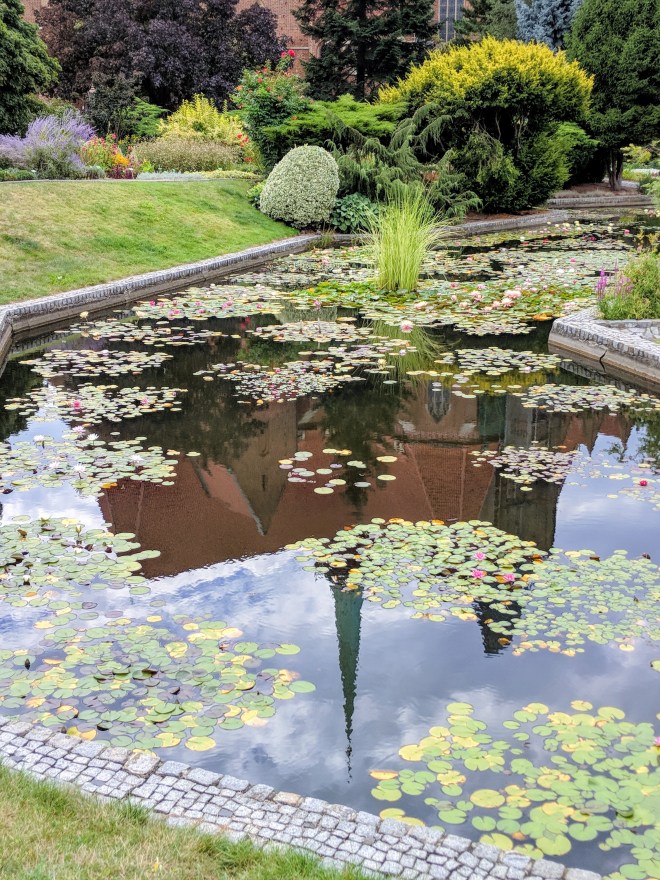
Alongside these cathedrals sits the Botanical Garden at the University of Wrocław which was on my must see list because… plants. What I can say is there were pockets of beauty which I am glad to not have missed while the majority of the gardens were not at their best. I fell a lot more in love with water lilies and the reflections of the cathedrals off the water mesmerized me for more than an hour. And if I hadn’t made my way through the gardens, I wouldn’t have had the best burger in town on my way home!


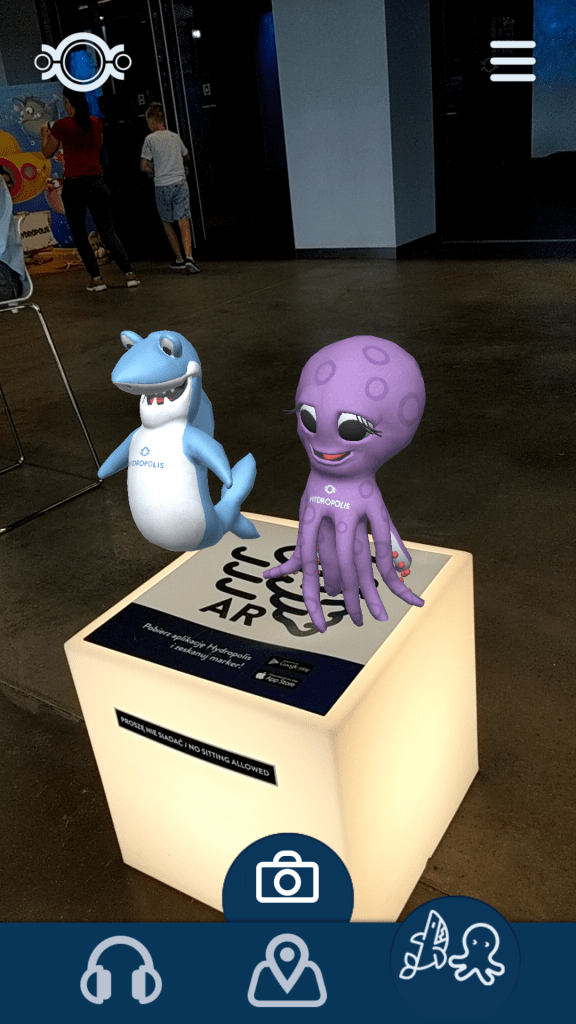
Hydropolis: One of my absolute favorite things in Wrocław is the ultra modern and interesting water education center – Hydropolis. SO COOL for a water lover like moi, and I daresay everyone should love water because it’s a necessary element for, well… life. This place was educational, entertaining, well executed, and just plain ol’ fun. The hosts of the center are a virtual reality shark and octopus who guide you from one exhibit to another. Yup, I loved ’em. There is no possible way I can share with you everything I learned in the *ahem* six hours I spent here (Google says most folks stay 1.5-2 hrs), so please feel free to make the trip!

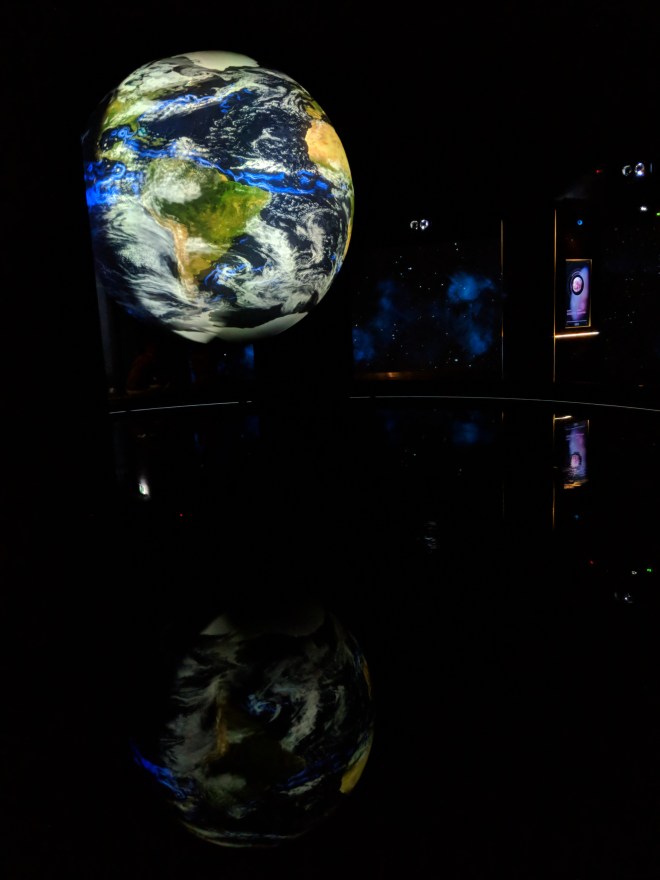
Projected 3D Earth reflected off the water tank below with the video we’re watching in the background. Yes please.

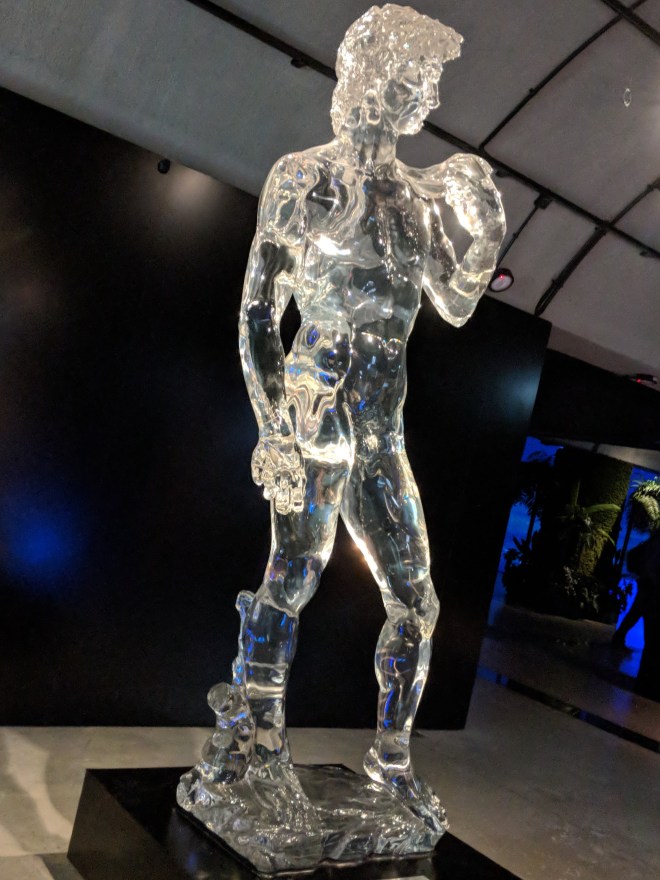
Examples of fun exhibits

Wrocław 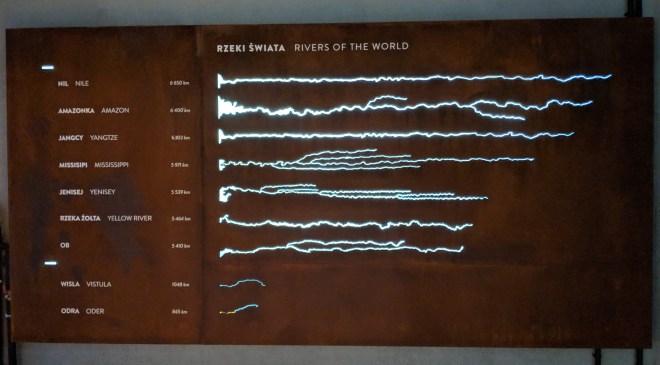
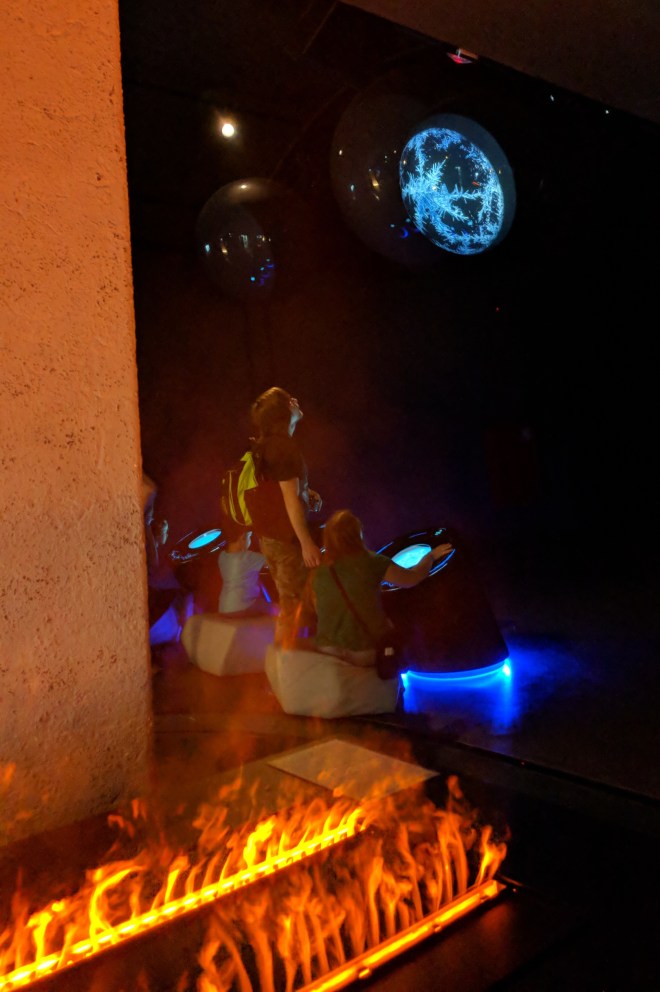
Relaxation zones

I’d have better photos for you if this guy wasn’t addicted to candy crush… 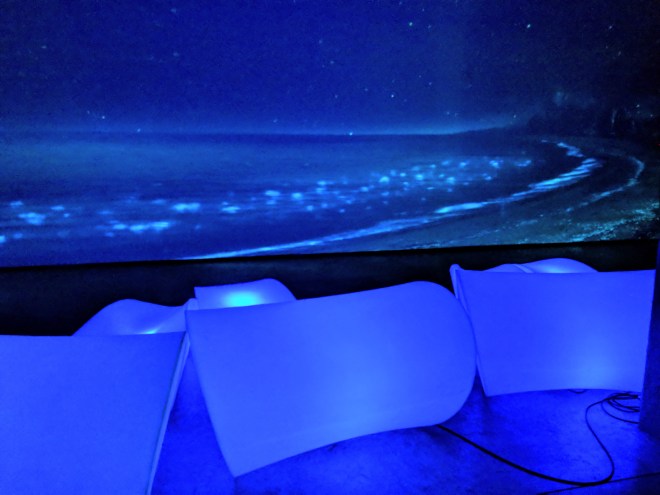
Just getting in and out was a blast to do and to watch – they call this the water printer
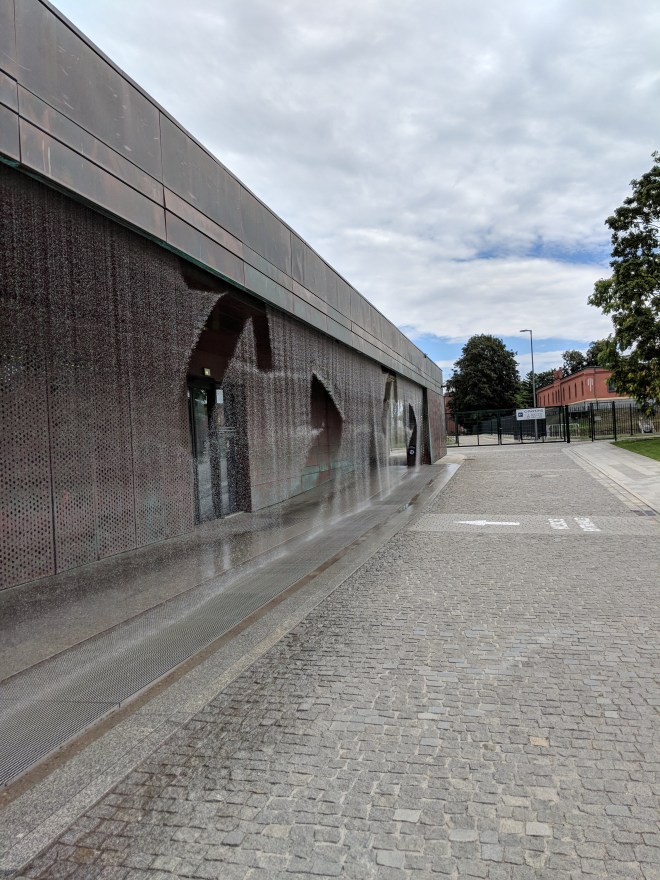

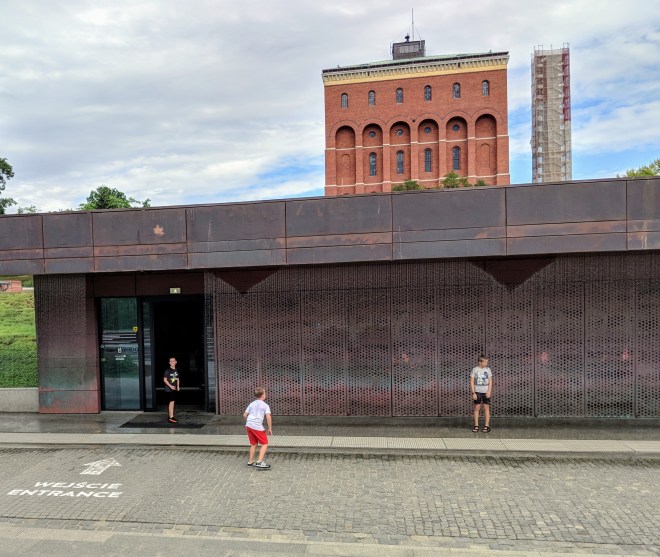
Run, little dude, run!
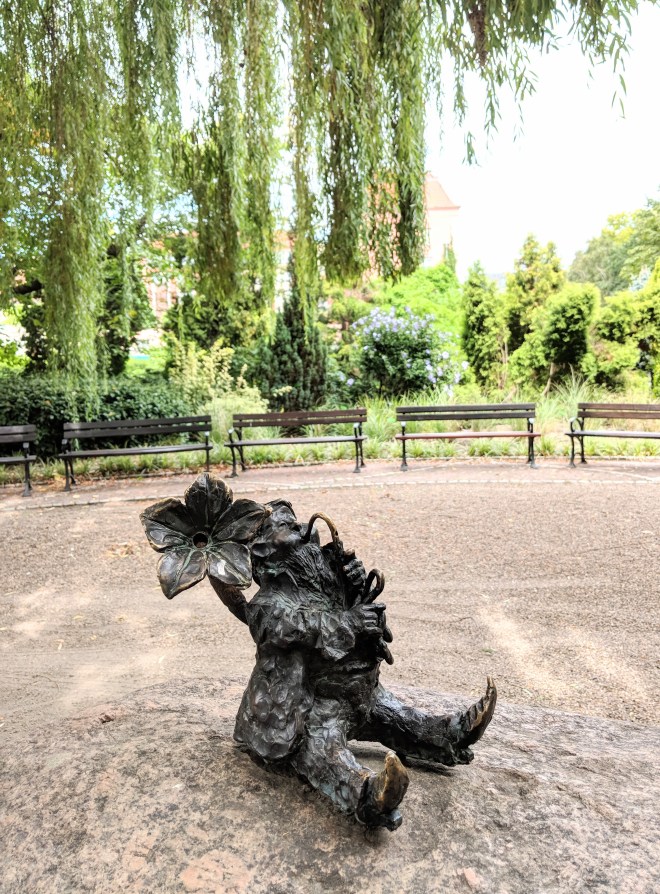
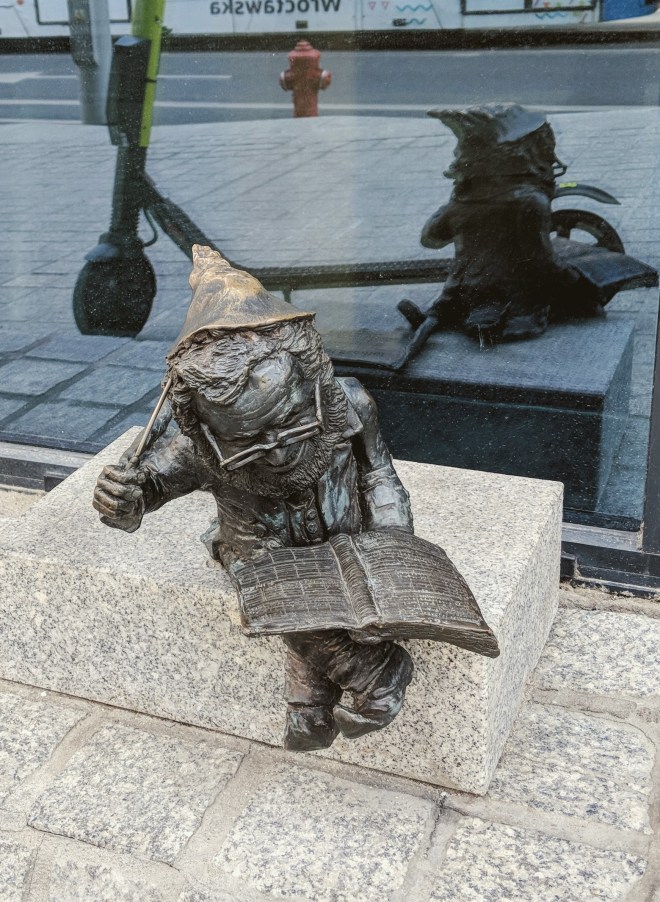
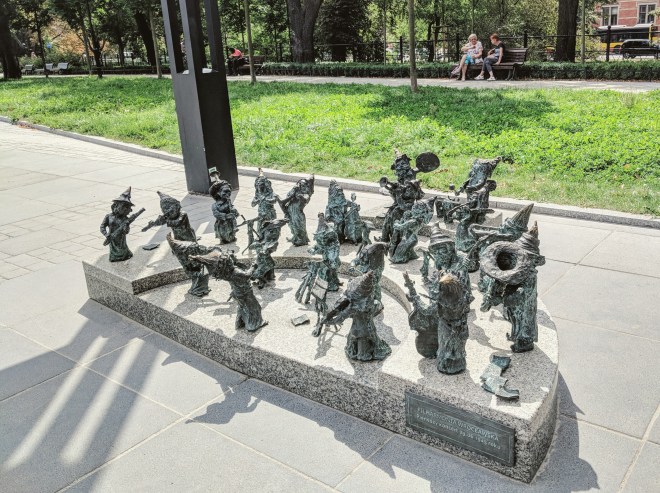
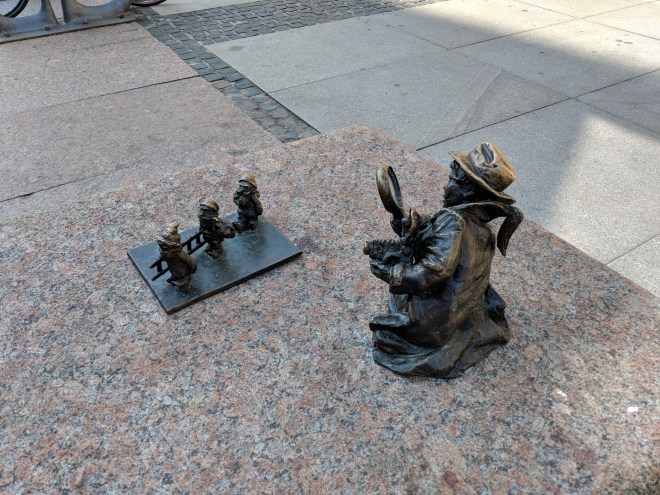
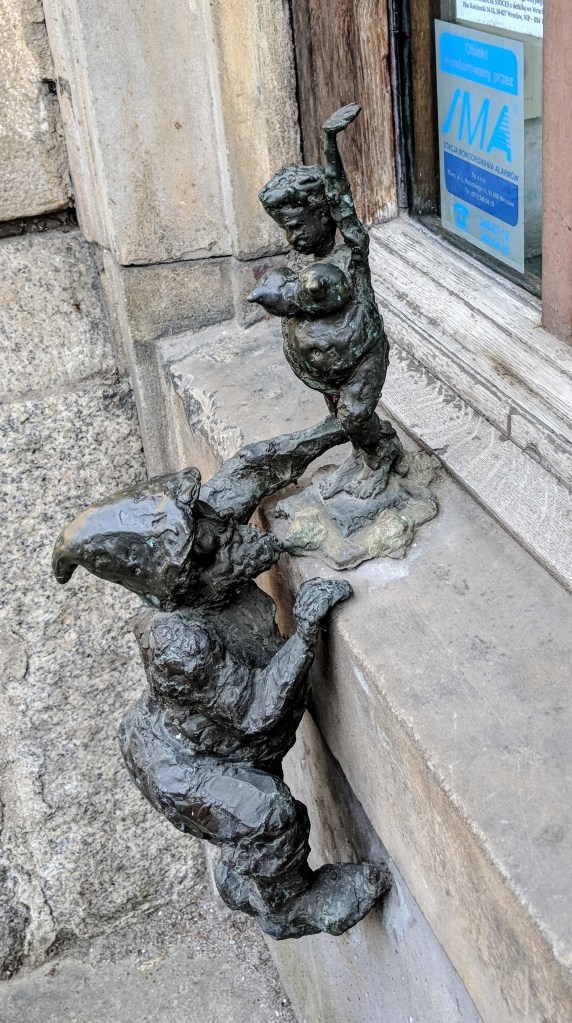
Dwarves: What started out as an inventive way to elicit support for peaceful protests against communism with the Orange Alternative (a group who would dress up or use silly props to mitigate risk of trouble from the communist authority in their protesting), Wrocław now has over 600 bronze Dwarves scattered throughout the city. These little guys pop up just about everywhere and the city has embraced them wholeheartedly with maps to the Dwarves, Dwarf dictionaries – there’s even a Dwarf finding app for your smart phone. Obviously, by this point, the meaning of each little statue is no longer strictly for human rights. Some shorties are advertisements or dedications to lovers. They have become a universal symbol, however, of “let’s all just get along”, even to the point of becoming gifts to other cities and nations by Wrocław leaders. While I didn’t capture every one, I’ll share with you some of the li’ls I was happy to meet…

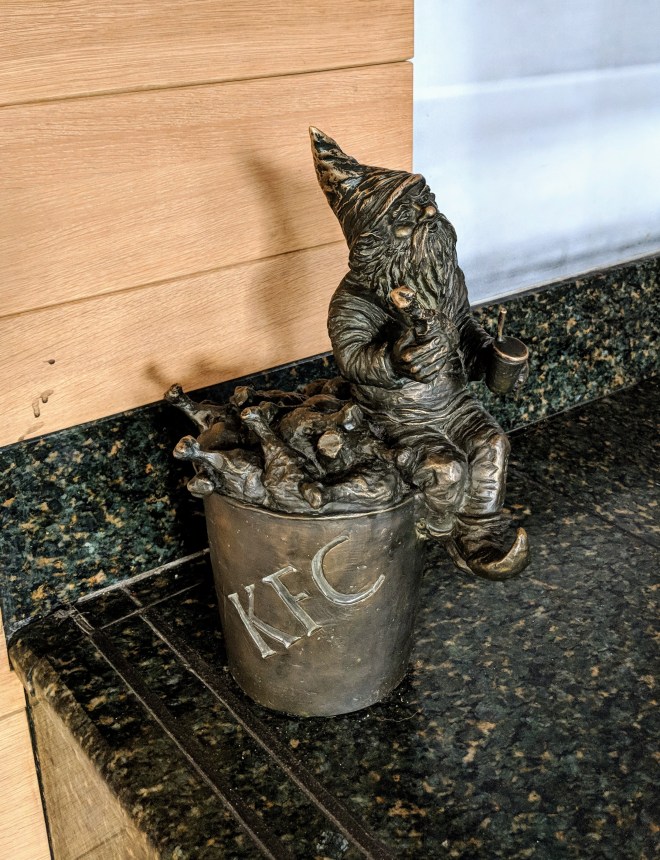
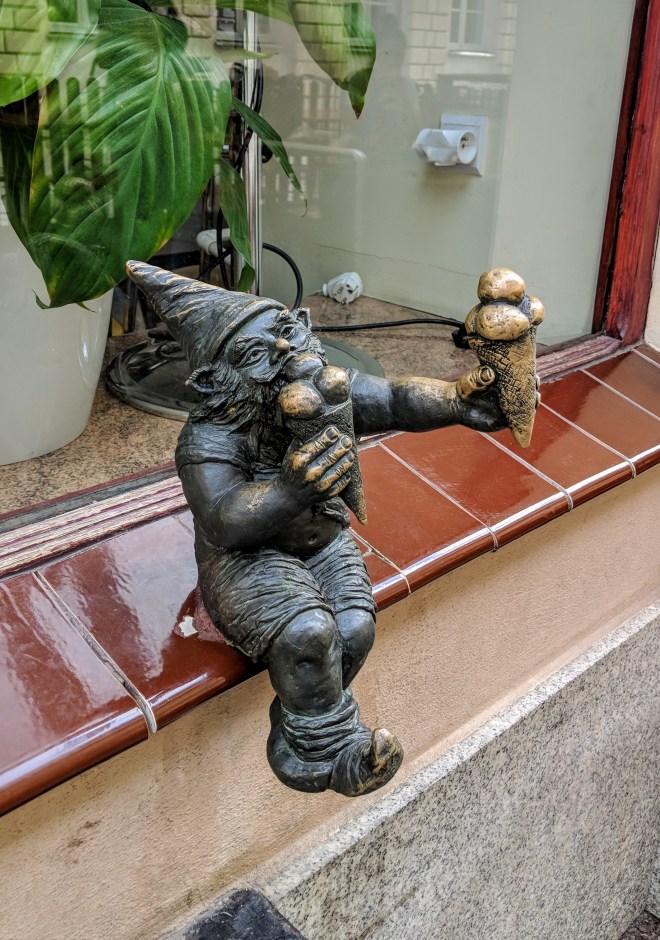

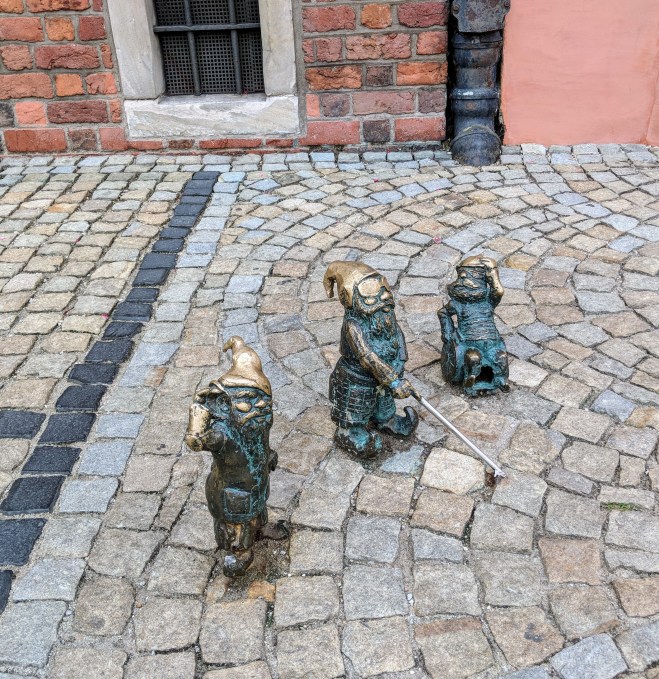

These are the highlights from what I know of Wrocław. Whaddya’ think?
 Exploiting Life